“Nobody ever gets what they want when it comes to love.”
―
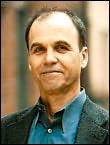
Scott Turow
“Who are we but the stories we tell ourselves, about ourselves, and believe?” ― Scott Turow, Ordinary Heroes
“What kills a person at twenty-five? Leukemia. An accident. But George knows the better odds are that someone who passes at that age dies of unhappiness. Drug overdose. Suicide. Reckless behavior.” ― Scott Turow, Limitations
“After a week, it's better. I miss her. I mourn her. But some peace has returned. She had been so unattainable - so young, so much a citizen of a different era - that it is hard to feel fully deprived.” ― Scott Turow, Innocent
“Life is simply experience; for reasons not readily discerned, we attempt to go on.” ― Scott Turow
“I am a law student in my first year at the law, and there are many moments when I am simply a mess.” ― Scott Turow
“Every American is from somewhere else. Each is hated for what he brings that is different from the rest. We live in uneasy peace. But it is peace, for the most part. ” ― Scott Turow, Ordinary Heroes
“As a defense lawyer, he refused to condemn his clients. Everyone else in the system--the cops, the prosecutors, the juries and judges--would take care of that; they didn't need his help.” ― Scott Turow, Limitations
“The years roll on and life seems like this more and more, that choices don't really exit in the way I thought they would when I was a child and expected the regal power of adulthood to provide clarity and insight.” ― Scott Turow, The Laws Of Our Fathers
“It wasn't luck or the order of the universe. It was simply what had happened.” ― Scott Turow, Ordinary Heroes
“This is life. You know the philosphers? The Present never stops. There's only the Present. You cheat life if you live in the Past.” ― Scott Turow, Ordinary Heroes
“The joke was thinking you were ever really in charge of your life. You pressed your oar down into the water to direct the canoe, but it was the current that shot you through the rapids. You just hung on and hoped not to hit a rock or a whirlpool.” ― Scott Turow, Innocent
“The only mainstream American household I know well is the one I grew up in, and I can report that my father, who was not a reader, nevertheless had some acquaintance with James Baldwin and John Cheever, because Time magazine put them on its cover and Time, for my father, was the ultimate cultural authority. In the last decade, the magazine whose red border twice enclosed the face of James Joyce has devoted covers to Scott Turow and Stephen King. These are honorable writers; but no one doubts it was the size of their contracts that won them covers. The dollar is now the yardstick of cultural authority, and an organ like Time, which not long ago aspired to shape the national taste, now serves mainly to reflect it.” ― Jonathan Franzen, How to Be Alone: Essays
“Anna is part of a generation that often seems frozen in place by their unreleting sense of irony. Virtually everything people believe in can be exposed as possessing laughable inconsistencies. And so they laugh. And stand still.” ― Scott Turow, Innocent
“It was crime at its purest, in which empathy, that most fundamental aspect of human morality, evaporated and another being became only a target for untamed fantasy.” ― Scott Turow, Limitations
“I was willing to do it. was determined to do it. By the end of the day, that had become my reaction to all of the signs of hard things ahead - a new purposefulness, hardy resolve. Everything I'd encountered so far - the law, my classmates, the great piece of discovery - had left me in deep thrall and I was bent on making sure that continued. I would have the best of it, I decided, whatever the obstacles.” ― Scott Turow, One L: The Turbulent True Story of a First Year at Harvard Law School
“He smiled hesitantly and she smiled back in the same fashion, but he was unsettled by the thought that Muriel had undergone a transformation. Some of the stuff that had come out of her mouth lately, about God or babies, made him wonder if she’d had a brain transplant at some point in the last ten years. It was funny what happened to people after forty, when they realized that our place here on earth was leased, not owned.” ― Scott Turow, Reversible Errors
“The fundamental tension of the profession is the struggle between bold advocacy of the client's interests and the need to establish and hold to limits that prevent advocacy from leading to irrational and inequitable results; and thus the lawyer's job in practice is to be on one hand the impassioned representative of his client to the world, and on the other the wise representative to his client of the legal system, and the society, explaining and upholding the demands and restrictions which that system places on them both. ” ― Scott Turow, One L: The Turbulent True Story of a First Year at Harvard Law School
“The law, for all its failings, has a noble goal - to make the little bit of life that people can actually control more just. We can't end disease or natural disasters, but we can devise rules for our dealings with one another that fairly weigh the rights and needs of evreyone, and withich, therefore, reflect our best vision of ourselves.” ― Scott Turow