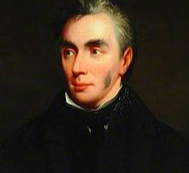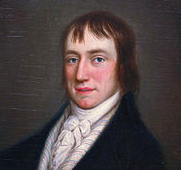
About William Wordsworth
William Wordsworth (7 April 1770 – 23 April 1850) was an English Romantic poet who, with Samuel Taylor Coleridge, helped to launch the Romantic Age in English literature with their joint publication Lyrical Ballads (1798). Wordsworth's magnum opus is generally considered to be The Prelude, a semi-autobiographical poem…
Selected Quotes
Poetry & Stories
Character of the Happy Warrior
Who is the happy Warrior? Who is heThat every man in arms should wish to be?
A Complaint
There is a change and I am poor;Your love hath been, nor long ago,
Composed upon Westminster Bridge
Earth has not any thing to show more fair:Dull would he be of soul who could pass by
Oh! pleasant exercise of hope and joy!
Oh! pleasant exercise of hope and joy!For mighty were the auxiliars which then stood
The Green Linnet
Beneath these fruit-tree boughs that shedTheir snow-white blossoms on my head,
About William Wordsworth
William Wordsworth (7 April 1770 – 23 April 1850) was an English Romantic poet who, with Samuel Taylor Coleridge, helped to launch the Romantic Age in English literature with their joint publication Lyrical Ballads (1798).
Wordsworth's magnum opus is generally considered to be The Prelude, a semi-autobiographical poem of his early years that he revised and expanded a number of times. It was posthumously titled and published by his wife in the year of his death, before which it was generally known as "the poem to Coleridge".
Wordsworth was Britain's poet laureate from 1843 until his death from pleurisy on 23 April 1850.
William Wordsworth: Quick Answers
Who is William Wordsworth?
William Wordsworth (7 April 1770 – 23 April 1850) was an English Romantic poet who, with Samuel Taylor Coleridge, helped to launch the Romantic Age in English literature with their joint publication Lyrical Ballads (1798). Wordsworth's magnum opus is generally considered to be The Prelude, a semi-autobiographical poem…
When was William Wordsworth born?
William Wordsworth was born on 7 April 1770. Associated place: Rydal, Westmorland.
Where can I read William Wordsworth's poetry?
Kavishala has 60 poems and stories by William Wordsworth, free to read on this page, along with selected quotes you can share.
Poems & Stories by William Wordsworth
Character of the Happy Warrior
Who is the happy Warrior? Who is heThat every man in arms should wish to be?
A Complaint
There is a change and I am poor;Your love hath been, nor long ago,
Composed upon Westminster Bridge
Earth has not any thing to show more fair:Dull would he be of soul who could pass by
Oh! pleasant exercise of hope and joy!
Oh! pleasant exercise of hope and joy!For mighty were the auxiliars which then stood
The Green Linnet
Beneath these fruit-tree boughs that shedTheir snow-white blossoms on my head,
I Travelled among Unknown Men
I travelled among unknown men,In lands beyond the sea;
Extempore Effusion upon the Death of James Hogg
When first, descending from the moorlands,I saw the Stream of Yarrow glide
I Wandered Lonely as a Cloud
I wandered lonely as a cloudThat floats on high o'er vales and hills,
Wisdom and Spirit of the universe!
Wisdom and Spirit of the universe!Thou Soul, that art the Eternity of thought!
Inside of King's College Chapel, Cambridge
Tax not the royal Saint with vain expense,With ill-matched aims the Architect who planned
It is a Beauteous Evening, Calm and Free
It is a beauteous evening, calm and free,The holy time is quiet as a Nun
The Rainbow
My heart leaps up when I beholdA rainbow in the sky:
Selected Quotes by William Wordsworth (चुनिंदा उद्धरण)
Wisdom and Spirit of the universe!Thou Soul, that art the Eternity of thought!
Beneath these fruit-tree boughs that shedTheir snow-white blossoms on my head,
When first, descending from the moorlands,I saw the Stream of Yarrow glide
I travelled among unknown men,In lands beyond the sea;
Oh! pleasant exercise of hope and joy!For mighty were the auxiliars which then stood
Tax not the royal Saint with vain expense,With ill-matched aims the Architect who planned
Videos on William Wordsworth
Loading videos…
Books by William Wordsworth
Loading books…