About Sarojini Naidu
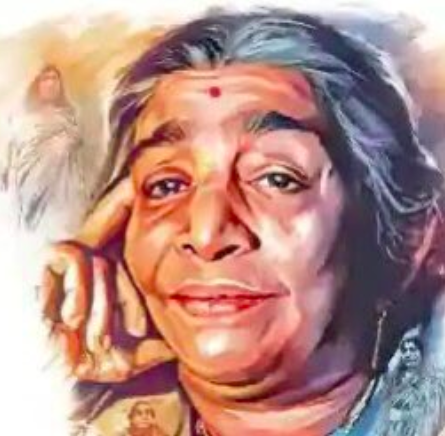
Sarojini Naidu (née Chattopadhyay; 13 February 1879 – 2 March 1949) was an Indian political activist and poet. A proponent of civil rights, women's emancipation, and anti-imperialistic ideas, she was an important figure in India's struggle for independence from colonial rule. Naidu's work as a poet earned her the sobr…
Selected Quotes
Poetry & Stories
Palanquin Bearers
Lightly, O lightly we bear her along,She sways like a flower in the wind of our song;
Autumn Song
Like a joy on the heart of a sorrow,The sunset hangs on a cloud;
Indian Weavers
WEAVERS, weaving at break of day,Why do you weave a garment so gay? . . .
Coromandel Fishers
Rise, brothers, rise; the wakening skies pray to the morning light,The wind lies asleep in the arms of the dawn like a child that has cried all night.
An Indian Love Song
HeLift up the veils that darken the delicate moon
About Sarojini Naidu
Born in a Bengali family in Hyderabad, Naidu was educated in Chennai, London and Cambridge. Following her time in England, where she worked as a suffragist, she was drawn to Indian National Congress' movement for India's independence from British rule. She became a part of the Indian nationalist movement and became a follower of Mahatma Gandhi and his idea of swaraj. She was appointed the President of the Indian National Congress in 1925 and later became the Governor of the United Provinces in 1947, becoming the first woman to hold the office of Governor in the Dominion of India.
Naidu's poetry includes both children's poems and others written on more serious themes including patriotism, romance, and tragedy. Published in 1912, "In the Bazaars of Hyderabad" remains one of her most popular poems. She was married to Govindarajulu Naidu, a general physician, and had five children with him. She died of a cardiac arrest on 2 March 1949.
Naidu began writing at the age of 12. Her play, Maher Muneer, written in Persian, impressed the Nizam of Kingdom of Hyderabad.
In 1905, her first collection of poems, named The Golden Threshold was published.[8] The volume bore an introduction by Arthur Symons. Her poems were admired by prominent Indian politicians like Gopal Krishna Gokhale.
Naidu poem "In the Bazaars of Hyderabad" was published as a part of The Bird of Time with her other poems in 1912. "In the Bazaars of Hyderabad" was well received by critics, who variously noted Naidu's visceral use of rich sensory images in her writing.
The Feather of The Dawn which contained poems written in 1927 by Naidu was edited and published posthumously in 1961 by her daughter Padmaja Naidu.
Sarojini Naidu: Quick Answers
Who is Sarojini Naidu?
Sarojini Naidu (née Chattopadhyay; 13 February 1879 – 2 March 1949) was an Indian political activist and poet. A proponent of civil rights, women's emancipation, and anti-imperialistic ideas, she was an important figure in India's struggle for independence from colonial rule.
When was Sarojini Naidu born?
Sarojini Naidu was born on 13 February 1879. Associated place: Hyderabad, Indian.
When did Sarojini Naidu die?
Sarojini Naidu passed away on 2 March 1949.
Where can I read Sarojini Naidu's poetry?
Kavishala has 7 poems and stories by Sarojini Naidu, free to read on this page, along with selected quotes you can share.
Poems & Stories by Sarojini Naidu
Palanquin Bearers
Lightly, O lightly we bear her along,She sways like a flower in the wind of our song;
Autumn Song
Like a joy on the heart of a sorrow,The sunset hangs on a cloud;
Indian Weavers
WEAVERS, weaving at break of day,Why do you weave a garment so gay? . . .
Coromandel Fishers
Rise, brothers, rise; the wakening skies pray to the morning light,The wind lies asleep in the arms of the dawn like a child that has cried all night.
An Indian Love Song
HeLift up the veils that darken the delicate moon
A Love Song From The North
Tell me no more of thy love, papeeha,Wouldst thou recall to my heart, papeeha,
In The Forest
HERE, O my heart, let us burn the dear dreams that are dead,Here in this wood let us fashion a funeral pyre
Selected Quotes by Sarojini Naidu (चुनिंदा उद्धरण)
Tell me no more of thy love, papeeha,Wouldst thou recall to my heart, papeeha,
HERE, O my heart, let us burn the dear dreams that are dead,Here in this wood let us fashion a funeral pyre
Lightly, O lightly we bear her along,She sways like a flower in the wind of our song;
Like a joy on the heart of a sorrow,The sunset hangs on a cloud;
Videos on Sarojini Naidu
Loading videos…
Books by Sarojini Naidu
Loading books…