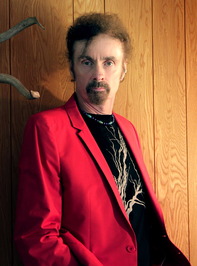
“I introduced Nora as my wife, though that was a lie. Old people, that's what they wanted to hear. If you were married, you were mature, reliable, exactly like them, because in their day men and women didn't just live together--they made a commitment, they had children and went on cruises and built big houses on lakes and filled them with all the precious trinkets and manufactured artifacts they'd collected along the way.”
―
T. Coraghessan Boyle
“I was reading, absorbed in an assault on K2 by a team of Japanese mountaineers, my lungs constricting in the thin burning air, the deadly sting of wind-lashed ice in my face, when the record -- Le Sacre du Printemps -- caught in the groove with a gnashing squeal as if a stageful of naiads, dryads and spandex satyrs had simultaneously gone lame.” ― T. Coraghessan Boyle
“It was then that my gaze happened to fall on the bookcase, on the gap there, where the old paperback of "Nine Stories" had fallen flat. "Where's the thing?" I said. "What thing?" "The mesh. My mesh." She shrugged. "I tossed it." "Tossed it? Where? What do you mean?" In the next moment I was in the kitchen, flipping open the lid of the trash can, only to find it empty. "You mean outside?" I shouted. "In the dumpster?" When I came thundering back into the room, she still hadn't moved. "Jesus, what were you thinking? That was mine. I wanted that. I wanted to keep it." Her lips barely moved. "It was dirty.” ― T.C. Boyle, Stories II: The Collected Stories of T. Coraghessan Boyle, Volume II
“An artist doesn't really owe anybody anything...You don't have to be politically correct. You don't have to be nice. You don't have to write things that are morally uplifting. All you have to do is write, or create, something that is great.” ― T. Coraghessan Boyle
“By the time I got to high school, I had learned to be more cautious about revealing my dreams. I was reading—and therefore writing—adventure stories. This was before I’d read Isak Dinesen and Mikhail Bulgakov, before Ernest Hemingway and T. Coraghessan Boyle, before I’d read something and really felt it, when writing was still just a compulsion, and my teen-age brain was only bordering on sentience. I filled pages of white space with swashbuckling, rapier-wielding, sidekick-sacrificing, dragon-baiting romance.(from 'High-School Confidential' in the The New Yorker.)” ― Téa Obreht
“I didn’t “teach” Ron Hansen or Stephen Wright or T. Coraghessan Boyle or Susan Taylor Chehak or Allan Gurganus or Gail Harper or Kent Haruf or Robert Chibka or Douglas Unger how to write, but I hope I may have encouraged them and saved them a little time. I did nothing more for them than Kurt Vonnegut did for me, but in my case Mr. Vonnegut—and Mr. Yount and Mr. Williams—did quite a lot. I’m talking about technical blunders, the perpetration of sheer boredom, point-of-view problems, the different qualities of first-person and third-person voice, the deadening effect of exposition in dialogue, the crippling limitations of the present tense, the intrusions upon narrative momentum caused by puerile and pointless experimentation—and on and on.” ― John Irving, The Imaginary Girlfriend
“but outside, in the desert, where the air was thin and light pollution unheard of, you could see right up into the back molars of the universe.” ― T. Coraghessan Boyle, The Terranauts
“And do you know where sausages come from?” The question surprised him. Sausage was meat and meat was inside everything that moved. The STORE, he said. She translated and the man laughed. She said, “He means before that, Sam, before the store?” THEY KILL PIGS, he said. She said the words aloud. The man laughed again. “He’s amazing,” he said to her. “He really is. But tell me, Sam, who kills them, who kills the pigs?” The simplest sign, a single finger pointed right at him: YOU. “Me? I’ve never killed anything in my life.” But he just shook his head, shook his head no, because that wasn’t the truth.” ― T. Coraghessan Boyle, Talk to Me
“People outside the field couldn’t fathom the depth of communication apes were capable of, though they were willing to admit that their dogs showed moods and desires, barking at the door or fetching the leash when they wanted to go out, for instance, or that their cats’ mewing served half a dozen different purposes, but what they failed to appreciate was that apes were of a different order altogether. Dogs and cats had been bred for thousands of generations to weed out the undesirable genes, domesticated to create an all but emotionally neutered animal designed to serve human needs, but apes came straight out of the wild. They were independent. Resentful of captivity. And if you stared into their eyes you saw yourself staring right back. To put Sam in the category of a dog or cat was demeaning—and beyond that, uniformed and unimaginative” ― T. Coraghessan Boyle, Talk to Me
“For Wrieto-San, every building at Taliesin was in a state of flux. When he accidentally set fire to the theater at Hillside one windy afternoon in the thirties (brush, kerosene, poor judgment), he took me aside with a wink and a nod and told me he’d been looking for an excuse to renovate the shoddy old thing for years.” ― T. Coraghessan Boyle, The Women: A Novel
“Throughout his career, Wrieto-San made a point of arranging meetings in his studio, where he could feel both impregnable and masterful, rather like a tortoise encapsulated in a gilded shell.” ― T. Coraghessan Boyle, The Women: A Novel
“Again, one wonders how Wrieto-San was able to come up with the financing to purchase materials and employ a cohort of some twenty-five masons, carpenters and laborers, many of whom had to be housed and fed on the premises. I can imagine him working his legendary charm, of course, and perhaps even trading off the sympathetic reaction to Mamah’s death as a wedge to separate friends, tradesmen and prospective clients alike from their resources, and yet still . . .” ― T. Coraghessan Boyle, The Women: A Novel
“Wrieto-San adopted the square as his symbol because he understood it to represent probity, solidity, the virtues of the foursquare, and, of course, it is testamentary to the rectilinear patterns of his early and middle work. In contradistinction, we Japanese believe the circle to be the ideal form, as it is perfectly harmonious, sans the sharp individual edges of the square.” ― T. Coraghessan Boyle, The Women: A Novel
“And it was clear that the fundamental problem facing our species, the root cause of all the worlds woes, the very reason we need a place like E2 to begin with was over population.” ― T. Coraghessan Boyle, The Terranauts
“was something he was just going to have to live with, and so what if it was every minute of every day for the rest of his life?” ― T. Coraghessan Boyle, Talk to Me
“The Spring Green Weekly Home News was savage, inflammatory, labeling Frank and her “a menace to the morals of the community and an insult to every family therein,” ― T. Coraghessan Boyle, The Women: A Novel
“And worse: they’d petitioned the sheriff to arrest her and Frank on a morals charge. A morals charge, for God’s sake. It was like something out of the Dark Ages. Or Salem. A Salem witch hunt.” ― T. Coraghessan Boyle, The Women: A Novel
“The roar of the engine, the startled looks on the faces of the cows, the clouds shredding overhead. He shrugged. “Apparently. But they’re educated people—at least he is. Very well-spoken for a Negro. Name’s Julius, I think it was. Or no, no: Julian. Julian something.” ― T. Coraghessan Boyle, The Women: A Novel
“She was a matchless beauty, elegant, brilliant, worldly, and if he’d seen nothing like her in Chicago, what must the hidalgos have thought of her out there under the open sky? He pictured her in the arms of a tall mustachioed figure in a sombrero, some sunburned hybrid of Tom Mix and Teddy Roosevelt, and felt the loss of her like a physical ache.” ― T. Coraghessan Boyle, The Women: A Novel