“Such a marvel, the tenacity of the buds to surge with life every spring, to greet the lengthening days and warming weather with exuberance, no matter what hardships were brought by winter.”
―
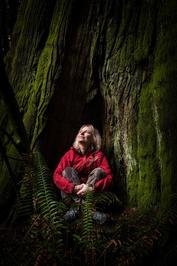
Suzanne Simard,
Finding the Mother Tree: Discovering the Wisdom of the Forest
“Plants are attuned to one another's strengths and weaknesses, elegantly giving and taking to attain exquisite balance. There is grace in complexity, in actions cohering, in sum totals.” ― Suzanne Simard, Finding the Mother Tree: Discovering the Wisdom of the Forest
“I don’t presume to grasp Aboriginal knowledge fully. It comes from a way of knowing the earth—an epistemology—different from that of my own culture. It speaks of being attuned to the blooming of the bitterroot, the running of the salmon, the cycles of the moon. Of knowing that we are tied to the land—the trees and animals and soil and water—and to one another, and that we have a responsibility to care for these connections and resources, ensuring the sustainability of these ecosystems for future generations and to honor those who came before. Of treading lightly, taking only what gifts we need, and giving back. Of showing humility toward and tolerance for all we are connected to in this circle of life. But what my years in the forestry profession have also shown me is that too many decision-makers dismiss this way of viewing nature and rely only on select parts of science. The impact has become too devastating to ignore. We can compare the condition of the land where it has been torn apart, each resource treated in isolation from the rest, to where it has been cared for according to the Secwepemc principal of k̓wseltktnews (translated as “we are all related”) or the Salish concept of nə́c̓aʔmat ct (“we are one”). We must heed the answers we’re being given.” ― Suzanne Simard, Finding the Mother Tree: Discovering the Wisdom of the Forest
“Trees don't rely exclusively on dispersal in the air, for if they did, some neighbors would not get wind of the danger. Dr. Suzanne Simard of the University of British Columbia in Vancouver has discovered that they also warn each other using chemical signals sent through the fungal networks around their root tips, which operate no matter what the weather. Surprisingly, news bulletins are sent via the roots not only by means of chemical compounds but also by means of electrical impulses that travel at the speed of a third of an inch per second. In comparison with our bodies, it is, admittedly, extremely slow. However there are species in the animal kingdom, such as jellyfish and worms, whose nervous systems conduct impulses at similar speed. Once the latest news has been broadcast, all oaks int he area promptly pump tannins through their veins.” ― Peter Wohlleben, The Hidden Life of Trees: What They Feel, How They Communicate: Discoveries from a Secret World
“We can continue pushing our earth out of balance, with greenhouse gases accelerating each year, or we can regain balance by acknowledging that if we harm one species, one forest, one lake, this ripples through the entire complex web. Mistreatment of one species is mistreatment of all.The rest of the planet has been waiting patiently for us to figure that out. Making this transformation requires that humans recommect with nature -- the forests, the prairie, the oceans -- instead of treating everything and everyone as objects for exploitation.” ― Suzanne Simard, Finding the Mother Tree: Discovering the Wisdom of the Forest
“We chattered about the implications for farms: if legumes passed nitrogen to corn, for instance, we could mix crops and stop having to pollute the soil with fertilizers and herbicides.” ― Suzanne Simard, Finding the Mother Tree: Discovering the Wisdom of the Forest
“from a different fungal species. More than a million exist on earth, about six times the number of plant species, with only about 10 percent of fungal species identified” ― Suzanne Simard, Finding the Mother Tree: Discovering the Wisdom of the Forest
“I loved maps; they led to adventure, discovery.” ― Suzanne Simard, Finding the Mother Tree: Discovering the Wisdom of the Forest
“A good upbringing is necessary for a long life, but sometimes the patience of the young trees is sorely tested. As I mentioned in chapter 5, "Tree Lottery," acorns and beechnuts fall at the feet of large "mother trees." Dr. Suzanne Simard, who helped discover maternal instincts in trees, describes mother trees as dominant trees widely linked to other trees in the forest through their fungal-root connections. These trees pass their legacy on to the next generation and exert their influence in the upbringing of the youngsters. "My" small beech trees, which have by now been waiting for at least eighty years, are standing under mother trees that are about two hundred years old -- the equivalent of forty-year-olds in human terms. The stunted trees can probably expect another two hundred years of twiddling their thumbs before it is finally their turn. The wait time is, however, made bearable. Their mothers are in contact with them through their root systems, and they pass along sugar and other nutrients. You might even say they are nursing their babies.” ― Peter Wohlleben, The Hidden Life of Trees: What They Feel, How They Communicate: Discoveries from a Secret World
“But Douglas fir and ponderosa pine were both better than the spruce and subalpine fir at minimizing water loss, helping them cope with the drought. They did this by opening their stomata for only a few hours in the morning when the dew was heavy. In these early hours, trees sucked carbon dioxide in through the open pores to make sugar, and in the process, transpired water brought up from the roots. By noon, they slammed their stomata closed, shutting down photosynthesis and transpiration for the day.” ― Suzanne Simard, Finding the Mother Tree: Discovering the Wisdom of the Forest
“There is a necessary wisdom in the give-and-take of nature—its quiet agreements and search for balance. There is an extraordinary generosity.” ― Suzanne Simard, Finding the Mother Tree: Discovering the Wisdom of the Forest
“When Mother Trees—the majestic hubs at the center of forest communication, protection, and sentience—die, they pass their wisdom to their kin, generation after generation, sharing the knowledge of what helps and what harms, who is friend or foe, and how to adapt and survive in an ever-changing landscape. It’s what all parents do.” ― Suzanne Simard, Finding the Mother Tree: Discovering the Wisdom of the Forest
“I’d learned to deal with conflict by running from it. I was terrible at standing my ground, never mind giving talks.” ― Suzanne Simard, Finding the Mother Tree: Discovering the Wisdom of the Forest
“I was lucky to become one of the first in the new generation of women in the logging industry, but what I found was not what I had grown up to understand. Instead I discovered vast landscapes cleared of trees, soils stripped of nature's complexity...” ― Suzanne Simard, Finding the Mother Tree: Discovering the Wisdom of the Forest
“This Mother Tree was the central hub that the saplings and seedlings nested around, with threads of different fungal species, of different colors and weights, linking them, layer upon layer, in a strong, complex web” ― Suzanne Simard, Finding the Mother Tree: Discovering the Wisdom of the Forest
“There is no moment too small in the world. Nothing should be lost. Everything has a purpose, and everything is in need of care. This is my creed. Let us embrace it. We can watch it rise. Just like that, at any time—all the time—wealth and grace will soar.” ― Suzanne Simard, Finding the Mother Tree: Discovering the Wisdom of the Forest
“How had the trees weathered the changing cycles of growth and dormancy, and how did this compare to the joys and hardships my family had endured in a fraction of the time?” ― Suzanne Simard, Finding the Mother Tree: Discovering the Wisdom of the Forest
“We can continue pushing our earth out of balance, with greenhouse gases accelerating each year, or we can regain balance by acknowledging that if we harm one species, one forest, one lake, this ripples through the entire complex web. Mistreatment of one species is mistreatment of all. The rest of the planet has been waiting patiently for us to figure that out.Making this transformation requires that humans reconnect with nature--the forests, the prairie, the oceans--instead of treating everything and everyone as objects for exploitation.” ― Suzanne Simard, Finding the Mother Tree: Discovering the Wisdom of the Forest
“mothertreeproject.org” ― Suzanne Simard, Finding the Mother Tree: Discovering the Wisdom of the Forest