“The greatest privilege of childhood is to live totally in the present.”
―
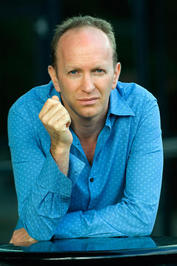
Simon Sebag Montefiore,
One Night in Winter
“Power is always personal: any study of a Western democratic leader today reveals that, even in a transparent system with its short periods in office, personalities shape administrations. Democratic leaders often rule through trusted retainers instead of official ministers. In any court, power is as fluid as human personality.” ― Simon Sebag Montefiore, The Romanovs: 1613-1918
“Marx wrote that 'History repeats itself, first as tragedy, second as farce.' This was witty but far from true. History is never repeated, but it borrows, steals, echoes and commandeers the past to create a hybrid, something unique out of the ingredients of past and present.” ― Simon Sebag Montefiore, The Romanovs: 1613-1918
“What's important is not who YOU love but WHO loves you.” ― Simon Sebag Montefiore, One Night in Winter
“Necessity is very often the mother of romance.” ― Simon Sebag Montefiore, Jerusalem: The Biography
“The happiness of children is based on their ignorance of what their parents are really thinking” ― Simon Sebag Montefiore, One Night in Winter
“Sex fills a few hours of our lives yet those precious minutes count for more than months and years” ― Simon Sebag Montefiore, One Night in Winter
“Every love story is a requiem.” ― Simon Sebag Montefiore, One Night in Winter
“Heartbreak is an agonizing disease that you're delighted to have” ― Simon Sebag Montefiore, One Night in Winter
“One of those who cooked for Rasputin during the Great War was a chef at Petrograd’s luxurious Astoria Hotel who went on, after the Revolution, to cook for Lenin and Stalin. He was Spiridon Putin, grandfather of President Vladimir Putin.” ― Simon Sebag Montefiore, The Romanovs: 1613-1918
“The European upper-class could not decide if the Jews were a noble race of persecuted biblical heroes, everyone a King David and Maccabee, or a sinister conspiracy of mystically brilliant, hook-nosed, hobbits with almost supernatural powers.” ― Simon Sebag Montefiore, Jerusalem: The Biography
“Jerusalem has a way of disappointing in tormenting both conquerors and visitors. The contrast between the real and heavenly cities is so excruciating that a hundred patients a year are committed to this city's asylum, suffering from the Jerusalem Syndrome, a madness of anticipation, disappointment and delusion.” ― Simon Sebag Montefiore, Jerusalem: The Biography
“So much of the inexplicable about the Soviet experience—the hatred of the peasantry for example, the secrecy and paranoia, the murderous witch hunt of the Great Terror, the placing of the Party above family and life itself, the suspicion of the USSR’s own espionage that led to the success of Hitler’s 1941 surprise attack—was the result of the underground life, the konspiratsia of the Okhrana and the revolutionaries, and also the Caucasian values and style of Stalin. And not just of Stalin.” ― Simon Sebag Montefiore, Young Stalin
“it is curious that each of Russia’s Times of Troubles – 1610–13, 1917–18 and 1991 –99 – ended with a new version of the old autocracy, eased by the habits and traditions of its fallen predecessor, and justified by the urgent need to restore order, radically modernize and regain Russia’s place as a great power.” ― Simon Sebag Montefiore, The Romanovs: 1613-1918
“Love was not thunderbolts but a meandering river, an accumulation of accidents, the momentum of details.” ― Simon Sebag Montefiore, One Night in Winter
“It seems that Russia today—dominated by, and accustomed to, autocracy and empire, and lacking strong civic institutions especially after the shattering of its society by the Bolshevik Terror—is destined to be ruled by self-promoting cliques for some time yet.” ― Simon Sebag Montefiore, Young Stalin
“Love is a question of geography.” ― Simon Sebag Montefiore, One Night in Winter
“The formation of Stalin’s character is particularly important because the nature of his rule was so personal.” ― Simon Sebag Montefiore, Young Stalin
“The Bible became the book of books, but it is not one document. It is a mystical library of interwoven texts by unknown authors who wrote and edited at different times with widely divergent aims. This sacred work of so many epochs and so many hands contains some facts of provable history, some stories of unprovable myth, some poetry of soaring beauty, and many passages of unintelligible, perhaps coded, perhaps simply mistranslated, mystery. Most of it is written not to recount events but to promote a higher truth—the relationship of one people and their God.” ― Simon Sebag Montefiore, Jerusalem, The Biography