About Rafiq Azad
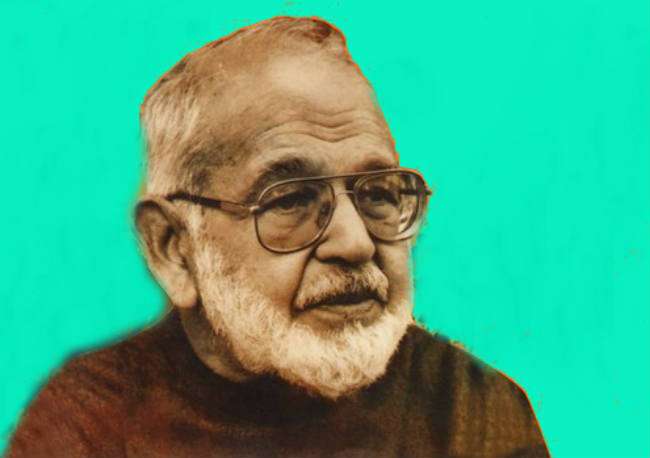
Rafiq Azad (born Rafiqul Islam Khan; February 14, 1941 – March 12, 2016) was a Bangladeshi poet, editor and writer. He is credited with 45 collections of poetry including Prakriti O Premer Kabita, Asambhaber Paye, Sahasra Sundar, Haturir Nichae Jiban, Khub Beshi Durea Noy, Khamakaro Bahaman Hey Udar Amiyo Batas and others. He is most well known for his poem "Bhaat De Haramjada" (Give me food, bastard) which was written during the famine of 1974. The poet participated in the war against the Pakistani occupation forces in 1971 Liberation War and was awarded ‘Notable Freedom Fighter Award” in 1997. He received Bangla Academy Literary Award in 1984 and national award Ekushey Padak in 2013, for his contribution to Bangla language and literature.
Azad was born on February 14, 1941, in the remote village of Guni in Tangail district, a central region of Bangladesh. He was the youngest of three children of Salimuddin Khan and Rabeya Khan. He earned his bachelor's and master's in Bengali literature from University of Dhaka in 1965 and 1967, respectively.
Azad was widely regarded as one of the most prolific young poets in the post-Liberation War period. He had 45 books to his credit, including an autobiography. His first book of poetry, Ashombhober Paye, was published in 1973. Since then, he had experimented with language and poetic form, where surrealistic approach was conspicuous.
He described himself as a 'lover of humans, nature and romance'. He depicted love, romance, poverty, sufferings, injustice, urban and rural life through his poems. Many of his love poems, including ‘He Doroja’ and ‘Bhalobashar Shonga’(Definition of Love), have been used and quoted many times in movies, TV dramas and other media in Bangladesh. He became widely famous when his controversial poem “Bhaat De Haramjada” was published in 1974. At the time the country was going through its worst famine. It was an angry poem about a starving man lashing out in impotent rage- “Bhat De Haramzada, Noile Manchitro Khabo” (“give me food, bastard! Or I will engulf your map, your geography!”). The indication was -if the newly independent country cannot even feed its own people, then what good is the liberation? The poet quickly became the center of a controversy. The Sheikh Mujib administration found the poem to be incendiary and an attack on the ruling party, while his readership hailed it as a rebellious and courageous outburst. In an attempt to settle the debate, Azad explained to the administration, by writing a long analysis of how his poem only reflected the great literary tradition of Bengal and the poem intended no animosity toward the government.