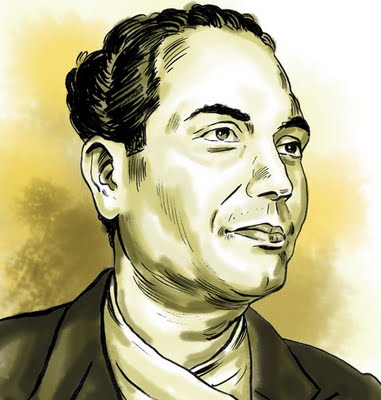
“The greatest enemy of knowledge is not ignorance, it is the illusion of knowledge.”
―
Daniel J. Boorstin
“Reading list (1972 edition)[edit]1. Homer – Iliad, Odyssey2. The Old Testament3. Aeschylus – Tragedies4. Sophocles – Tragedies5. Herodotus – Histories6. Euripides – Tragedies7. Thucydides – History of the Peloponnesian War8. Hippocrates – Medical Writings9. Aristophanes – Comedies10. Plato – Dialogues11. Aristotle – Works12. Epicurus – Letter to Herodotus; Letter to Menoecus13. Euclid – Elements14. Archimedes – Works15. Apollonius of Perga – Conic Sections16. Cicero – Works17. Lucretius – On the Nature of Things18. Virgil – Works19. Horace – Works20. Livy – History of Rome21. Ovid – Works22. Plutarch – Parallel Lives; Moralia23. Tacitus – Histories; Annals; Agricola Germania24. Nicomachus of Gerasa – Introduction to Arithmetic25. Epictetus – Discourses; Encheiridion26. Ptolemy – Almagest27. Lucian – Works28. Marcus Aurelius – Meditations29. Galen – On the Natural Faculties30. The New Testament31. Plotinus – The Enneads32. St. Augustine – On the Teacher; Confessions; City of God; On Christian Doctrine33. The Song of Roland34. The Nibelungenlied35. The Saga of Burnt Njál36. St. Thomas Aquinas – Summa Theologica37. Dante Alighieri – The Divine Comedy;The New Life; On Monarchy38. Geoffrey Chaucer – Troilus and Criseyde; The Canterbury Tales39. Leonardo da Vinci – Notebooks40. Niccolò Machiavelli – The Prince; Discourses on the First Ten Books of Livy41. Desiderius Erasmus – The Praise of Folly42. Nicolaus Copernicus – On the Revolutions of the Heavenly Spheres43. Thomas More – Utopia44. Martin Luther – Table Talk; Three Treatises45. François Rabelais – Gargantua and Pantagruel46. John Calvin – Institutes of the Christian Religion47. Michel de Montaigne – Essays48. William Gilbert – On the Loadstone and Magnetic Bodies49. Miguel de Cervantes – Don Quixote50. Edmund Spenser – Prothalamion; The Faerie Queene51. Francis Bacon – Essays; Advancement of Learning; Novum Organum, New Atlantis52. William Shakespeare – Poetry and Plays53. Galileo Galilei – Starry Messenger; Dialogues Concerning Two New Sciences54. Johannes Kepler – Epitome of Copernican Astronomy; Concerning the Harmonies of the World55. William Harvey – On the Motion of the Heart and Blood in Animals; On the Circulation of the Blood; On the Generation of Animals56. Thomas Hobbes – Leviathan57. René Descartes – Rules for the Direction of the Mind; Discourse on the Method; Geometry; Meditations on First Philosophy58. John Milton – Works59. Molière – Comedies60. Blaise Pascal – The Provincial Letters; Pensees; Scientific Treatises61. Christiaan Huygens – Treatise on Light62. Benedict de Spinoza – Ethics63. John Locke – Letter Concerning Toleration; Of Civil Government; Essay Concerning Human Understanding;Thoughts Concerning Education64. Jean Baptiste Racine – Tragedies65. Isaac Newton – Mathematical Principles of Natural Philosophy; Optics66. Gottfried Wilhelm Leibniz – Discourse on Metaphysics; New Essays Concerning Human Understanding;Monadology67. Daniel Defoe – Robinson Crusoe68. Jonathan Swift – A Tale of a Tub; Journal to Stella; Gulliver's Travels; A Modest Proposal69. William Congreve – The Way of the World70. George Berkeley – Principles of Human Knowledge71. Alexander Pope – Essay on Criticism; Rape of the Lock; Essay on Man72. Charles de Secondat, baron de Montesquieu – Persian Letters; Spirit of Laws73. Voltaire – Letters on the English; Candide; Philosophical Dictionary74. Henry Fielding – Joseph Andrews; Tom Jones75. Samuel Johnson – The Vanity of Human Wishes; Dictionary; Rasselas; The Lives of the Poets” ― Mortimer J. Adler, How to Read a Book: The Classic Guide to Intelligent Reading
“Too often we forget that discipline really means to teach, not to punish. A disciple is a student, not a recipient of behavioural consequences.” ― Daniel J. Siegel, The Whole-Brain Child: Revolutionary Strategies to Nurture Your Child's Developing Mind
“To my wife Marganit and my children Ella Rose and Daniel Adam without whom this book would have been completed two years earlier.” ― Joseph J. Rotman, An Introduction to Algebraic Topology
“Our dreams and stories may contain implicit aspects of our lives even without our awareness. In fact, storytelling may be a primary way in which we can linguistically communicate to others—as well as to ourselves—the sometimes hidden contents of our implicitly remembering minds. Stories make available perspectives on the emotional themes of our implicit memory that may otherwise be consciously unavailable to us. This may be one reason why journal writing and intimate communication with others, which are so often narrative processes, have such powerful organizing effects on the mind: They allow us to modulate our emotions and make sense of the world.” ― Daniel J. Siegel, The Developing Mind: How Relationships and the Brain Interact to Shape Who We Are
“This is where I belong. Wherever you are. Always.” ― J. Daniels, Where I Belong
“This shit was never casual for me. Never. You've owned me since that fucking wedding.” ― J. Daniels, Sweet Addiction
“Each of us needs periods in which our minds can focus inwardly. Solitude is an essential experience for the mind to organize its own processes and create an internal state of resonance. In such a state, the self is able to alter its constraints by directly reducing the input from interactions with others. (p. 235)” ― Daniel J. Siegel, The Developing Mind: How Relationships and the Brain Interact to Shape Who We Are
“A wonderful thing about a book, in contrast to a computer screen, is that you can take it to bed with you.” ― Daniel J. Boorstin
“Education is learning what you didn't even know you didn't know.” ― Daniel J. Boorstin
“It has always been my understanding that truth and freedom can only exist in wild places.” ― Daniel J. Rice, This Side of a Wilderness
“Music may be the activity that prepared our pre-human ancestors for speech communication and for the very cognitive, representational flexibility necessary to become humans.” ― Daniel J. Levitin, This Is Your Brain on Music: The Science of a Human Obsession
“He never cared too much for parties or people, but misanthropy could easily be cured by several alcoholic drinks.” ― Daniel J. Rice, This Side of a Wilderness
“But when I look at you, it’s all I can think about. Marriage. Kids. Everything. I want it all with you. And I don’t want to wait.” ― J. Daniels, Sweet Possession
“A good friend will help you move, but a true friend will help you move a body.” ― Steven J. Daniels, Weeds in The Garden of Love
“As children develop, their brains "mirror" their parent's brain. In other words, the parent's own growth and development, or lack of those, impact the child's brain. As parents become more aware and emotionally healthy, their children reap the rewards and move toward health as well.” ― Daniel J. Siegel, The Whole-Brain Child: Revolutionary Strategies to Nurture Your Child's Developing Mind
“I can’t imagine loving her any more than I do right now. But I know I will. Because every second I’m with her, I fall harder.” ― J. Daniels, Where I Belong
“I walked slowly to enjoy this freedom, and when I came out of the mountains, I saw the sky over the prairie, and I thought that if heaven was real, I hoped it was a place I never had to go, for this earth was greater than any paradise.” ― Daniel J. Rice, The UnPeopled Season: Journal from a North Country Wilderness
“Sorry to hear about your Dad."He shrugged. "He was seventy, and we always told him fast food would kill him.""Heart attack?""He was hit by a Pizza Express truck.” ― J.A. Konrath, Whiskey Sour