“North Korea invites parody. We laugh at the excesses of the propaganda and the gullibility of the people. But consider that their indoctrination began in infancy, during the fourteen-hour days spent in factory day-care centers; that for the subsequent fifty years, every song, film, newspaper article, and billboard was designed to deify Kim Il-sung; that the country was hermetically sealed to keep out anything that might cast doubt on Kim Il-sung's divinity. Who could possibly resist?”
―
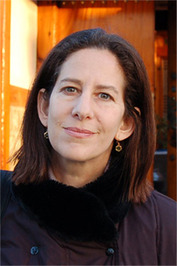
Barbara Demick,
Nothing to Envy: Ordinary Lives in North Korea
“North Korean defectors often find it hard to settle down. It is not easy for somebody who’s escaped a totalitarian country to live in the free world. Defectors have to rediscover who they are in a world that offers endless possibilities. Choosing where to live, what to do, even which clothes to put on in the morning is tough enough for those of us accustomed to making choices; it can be utterly paralyzing for people who’ve had decisions made for them by the state their entire lives.” ― Barbara Demick, Nothing to Envy: Ordinary Lives in North Korea
“It is axiomatic that one death is a tragedy, a thousand is a statistic. So it was for Mi-ran. What she didn't realize is that her indifference was an acquired survival skill. In order to get through the 1990s alive, one had to suppress any impulse to share food. To avoid going insane, one had to learn to stop caring.” ― Barbara Demick, Nothing to Envy: Ordinary Lives in North Korea
“But now she couldn’t deny what was staring her plainly in the face: dogs in China ate better than doctors in North Korea.” ― Barbara Demick, Nothing to Envy: Ordinary Lives in North Korea
“As Mrs. Song would observe a decade later, when she thought back on all the people she knew who died during those years in Chongjin, it was the "simple and kindhearted people who did what they were told-- they were the first to die.” ― Barbara Demick, Nothing to Envy: Ordinary Lives in North Korea
“Liberty and love These two I must have. For my love I’ll sacrifice My life. For liberty I’ll sacrifice My love.” ― Barbara Demick, Nothing to Envy: Ordinary Lives in North Korea
“If North Koreans paused to contemplate the obvious inconsistencies and lies in what they were told, they would find themselves in a dangerous place. They didn't have a choice. They couldn't flee their country, depose their leadership, speak out, or protest. In order to fit in, the average citizen had to discipline himself not to think too much.” ― Barbara Demick, Nothing to Envy: Ordinary Lives in North Korea
“The more there was to complain about, the more important it was to ensure that nobody did.” ― Barbara Demick, Nothing to Envy: Ordinary Lives in North Korea
“There was the natural human survival instinct to be optimistic.” ― Barbara Demick, Nothing to Envy: Ordinary Lives in North Korea
“A coal miner from Chongjin whom I met in 2004 in China told me, "People are not stupid. Everybody thinks our own government is to blame for our terrible situation. We all know we think that and we all know that everybody else thinks that. We don't need to talk about it.” ― Barbara Demick, Nothing to Envy: Ordinary Lives in North Korea
“Supervisors routinely fabricated statistics on agricultural production and industrial output because they were so fearful of telling their own bosses the truth. Lies were built upon lies, all the way to the top, so it is in fact conceivable that Kim Il-sung himself didn't know when the economy crashed” ― Barbara Demick, Nothing to Envy: Ordinary Lives in North Korea
“As her students were dying, she was supposed to teach them that they were blessed to be North Korean.” ― Barbara Demick, Nothing to Envy: Ordinary Lives in North Korea
“A North Korean soldier would later recall a buddy who had been given an American-made nail clipper and was showing it off to his friends. The soldier clipped a few nails, admired the sharp, clean edges, and marveled at the mechanics of this simple item. Then he realized with a sinking heart: If North Korea couldn’t make such a fine nail clipper, how could it compete with American weapons?” ― Barbara Demick, Nothing to Envy: Ordinary Lives in North Korea
“...the strength of the regime came from its ability to isolate its own citizens completely.” ― Barbara Demick, Nothing to Envy: Ordinary Lives in North Korea
“It is axiomatic that one death is a tragedy, a thousand is a statistic.” ― Barbara Demick, Nothing to Envy: Ordinary Lives in North Korea
“Dr. Kim couldn't remember the last time she'd seen a bowl of pure white rice. What was a bowl of rice doing there, just sitting out on the ground? She figured it out just before she heard the dog's bark.Up until that moment, a part of her had hoped that China would be just as poor as North Korea. She still wanted to believe that her country was the best place in the world. The beliefs she had cherished for a lifetime would be vindicated. But now she couldn't deny what was staring her plainly in the face: dogs in China ate better than doctors in North Korea.” ― Barbara Demick, Nothing to Envy: Ordinary Lives in North Korea
“As she sat alone in the apartment, the enormity of it all started to sink in. Any hope that the North Korean regime might change with the death of Kim Il-sung was quickly dashed. The power had passed to his son. Things weren't going to get any better. She heard her father's words replaying in her ears. "The son is even worse than the father." "Now we're really fucked," she said to herself. Only then did tears of self-pity fill her eyes.” ― Barbara Demick, Nothing to Envy: Ordinary Lives in North Korea
“Listening to South Korean television was like looking in the mirror for the first time in your life and realizing you were unattractive.” ― Barbara Demick, Nothing to Envy: Ordinary Lives in North Korea
“Under a system that sought to stamp out tainted blood for three generations, the punishment would extend to parents, grandparents, brothers, sisters, nieces, nephews, cousins. A lot of people felt if you had one life to give, you would give it to get rid of this terrible regime, but then you're not the only one getting punished. Your family would go through hell.” ― Barbara Demick, Nothing to Envy: Ordinary Lives in North Korea