Nancy Bush, poet
Sootradhar · Author

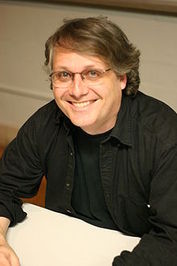
Nancy Bush

  • 1 Poems & Stories
  • 12.4K Reads

About Nancy Bush

Nancy Bush is a New York Times bestselling author of over forty novels, including the River Glen Series, Nowhere Series, and numerous stand alone novels. She also is the co-author of Last Breath, Last Girl Standing, and the Wicked Series, written with her sister and bestselling author Lisa Jackson, as well as the coll…

Poetry & Stories

  1. Quotes of Nancy Bush

    “It is the simplest phrase you can imagine,” Favreau said, “three monosyllabic words that people say to each other every day.” But the speech etched itself in rhetorical lore. It inspired music videos and memes and the full range of reactions that any blockbuster receives online today, from praise to out-of-context humor to arch mockery. Obama’s “Yes, we can” refrain is an example of a rhetorical device known as epistrophe, or the repetition of words at the end of a sentence. It’s one of many famous rhetorical types, most with Greek names, based on some form of repetition. There is anaphora, which is repetition at the beginning of a sentence (Winston Churchill: “We shall fight on the beaches, we shall fight on the landing grounds, we shall fight in the fields”). There is tricolon, which is repetition in short triplicate (Abraham Lincoln: “Government of the people, by the people, and for the people”). There is epizeuxis, which is the same word repeated over and over (Nancy Pelosi: “Just remember these four words for what this legislation means: jobs, jobs, jobs, and jobs”). There is diacope, which is the repetition of a word or phrase with a brief interruption (Franklin D. Roosevelt: “The only thing we have to fear is fear itself”) or, most simply, an A-B-A structure (Sarah Palin: “Drill baby drill!”). There is antithesis, which is repetition of clause structures to juxtapose contrasting ideas (Charles Dickens: “It was the best of times, it was the worst of times”). There is parallelism, which is repetition of sentence structure (the paragraph you just read). Finally, there is the king of all modern speech-making tricks, antimetabole, which is rhetorical inversion: “It’s not the size of the dog in the fight; it’s the size of the fight in the dog.” There are several reasons why antimetabole is so popular. First, it’s just complex enough to disguise the fact that it’s formulaic. Second, it’s useful for highlighting an argument by drawing a clear contrast. Third, it’s quite poppy, in the Swedish songwriting sense, building a hook around two elements—A and B—and inverting them to give listeners immediate gratification and meaning. The classic structure of antimetabole is AB;BA, which is easy to remember since it spells out the name of a certain Swedish band.18 Famous ABBA examples in politics include: “Man is not the creature of circumstances. Circumstances are the creatures of men.” —Benjamin Disraeli “East and West do not mistrust each other because we are armed; we are armed because we mistrust each other.” —Ronald Reagan “The world faces a very different Russia than it did in 1991. Like all countries, Russia also faces a very different world.” —Bill Clinton “Whether we bring our enemies to justice or bring justice to our enemies, justice will be done.” —George W. Bush “Human rights are women’s rights and women’s rights are human rights.” —Hillary Clinton In particular, President John F. Kennedy made ABBA famous (and ABBA made John F. Kennedy famous). “Mankind must put an end to war, or war will put an end to mankind,” he said, and “Each increase of tension has produced an increase of arms; each increase of arms has produced an increase of tension,” and most famously, “Ask not what your country can do for you; ask what you can do for your country.” Antimetabole is like the C–G–Am–F chord progression in Western pop music: When you learn it somewhere, you hear it everywhere.19 Difficult and even controversial ideas are transformed, through ABBA, into something like musical hooks.”―

    12.4K reads

More Poetry & Stories You May Like

husn-e-bazm-e-misal mein kya haihusn-e-bazm-e-misāl meñ kyā haiaa.ine ke ḳhayāl meñ kyā hai— रसा चुग़ताईQuotes of Stephanie Bond“One of us should stop her," Ranger said to Morelli, his eyes fixed on me."Not going to be me," Morelli said. "Have you ever tried to stop her from doing something she wanted to do?""Haven't had much success at it," Ranger said.Morelli rocked on his heels. "One thing I've learned about Stephanie over the years, she's not good at taking orders.""Has authority issues," Ranger said."And if you piss her off, she'll get even. She ran me over with her father's Buick once and broke my leg."That got a small smile out of Ranger."Nice to see you boys bonding," I said.”―— Stephanie BondQuotes of Hailey Edwards“Life after love was possible. I was proof. Loss taught you about yourself, burrowed in the dark parts of your soul and ate you from the inside out.”―— Hailey EdwardsQuotes of Scott McCloud“Art, as I see it, is any human activity which doesn’t grow out of either of our species’ two basic instincts: survival and reproduction.”―— Scott McCloudQuotes of Olivia Dade“Please tell me people who look like us can be loved.Please tell me people who look like us can be desired.Please tell me people who look like us can have happy endings.”―— Olivia DadeQuotes of Timothy Snyder“The president is a nationalist, which is not at all the same thing as a patriot. A nationalist encourages us to be our worst, and then tells us that we are the best. A nationalist, 'although endlessly brooding on power, victory, defeat, revenge,' wrote Orwell, tends to be 'uninterested in what happens in the real world.' Nationalism is relativist, since the only truth is the resentment we feel when we contemplate others. As the novelist Danilo Kiš put it, nationalism 'has no universal values, aesthetic or ethical.' A patriot, by contrast, wants the nation to live up to its ideals, which means asking us to be our best selves. A patriot must be concerned with the real world, which is the only place where his country can be loved and sustained. A patriot has universal values, standards by which he judges his nation, always wishing it well—and wishing that it would do better.”―— Timothy Snyder