“You can't really teach a kid anything: you can only show him the way and motivate him to learn it himself.”
―
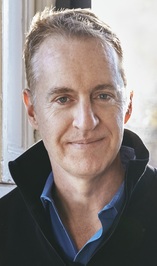
Dave Cullen,
Columbine
“The final portrait is often furthest from the truth.” ― Dave Cullen, Columbine
“Psychopaths don't act like Hannibal Lecter or Norman Bates. They come off like Hugh Grant, in his most adorable role.” ― Dave Cullen, Columbine
“When I fell out the window, I knew somebody would catch me. That's what I need to tell you: that I knew the loving world was there all the time. -Patrick Ireland of the Columbine massacre” ― Dave Cullen, Columbine
“You know, it gets frustrating, because you know in your heart where you were and what you said, and then people doubt you. And that's what bothers me the most. -Valeen Schnurr of the Columbine massacre” ― Dave Cullen, Columbine
“from the Basement tapes Eric outdid Dylan with the apologies. To the untrained eye, he seemed sincere. The psychologists on the case found Eric less convincing. They saw a psychopath. Classic. He even pulled the stunt of self-diagnosing to dismiss it. "I wish I was a fucking sociopath so I didn't have any remorse," Eric said. "But I do."Watching that made Dr. Fuselier angry. Remorse meant a deep desire to correct a mistake. Eric hadn't done it yet. He excused his actions several times on the tapes. Fuselier was tough to rattle, but that got to him."Those are the most worthless apologies I've ever heard in my life," he said. It got more ludicrous later, when Eric willed some of his stuff to two buddies, "if you guys live.""If you live?" Fuselier repeated. "They are going to go in there and quite possibly kill their friends. If they were the least bit sorry they would not do it!” ― Dave Cullen, Columbine
“The goal with hostages is to gradually lower expectations; in nonhostage crises, it's to lower emotions.” ― Dave Cullen, Columbine
“Prom was more about acting out some weird facsimile of adulthood: dress up like a tacky wedding party, hold hands and behave like a couple even if you've never dated, and observe the etiquette of Gilded Age debutantes thrust into modern celebrity: limos, red carpets and a constant stream of paparazzi, played by parents, teachers, and hired photo hacks.” ― Dave Cullen, Columbine
“For Eric, Columbine was a performance. Homicidal art. He actually referred to his audience in his journal: “the majority of the audience wont even understand my motives,” he complained. He scripted Columbine as made-for-TV murder, and his chief concern was that we would be too stupid to see the point. Fear was Eric’s ultimate weapon. He wanted to maximize the terror. He didn’t want kids to fear isolated events like a sporting event or a dance; he wanted them to fear their daily lives. It worked. Parents across the country were afraid to send their kids to school. Eric didn’t have the political agenda of a terrorist, but he had adopted terrorist tactics. Sociology professor Mark Juergensmeyer identified the central characteristic of terrorism as “performance violence.” Terrorists design events “to be spectacular in their viciousness and awesome in their destructive power. Such instances of exaggerated violence are constructed events: they are mind-numbing, mesmerizing theater.” The audience—for Timothy McVeigh, Eric Harris, or the Palestine Liberation Organization—was always miles away, watching on TV. Terrorists rarely settle for just shooting; that limits the damage to individuals. They prefer to blow up things—buildings, usually, and the smart ones choose carefully. “During that brief dramatic moment when a terrorist act levels a building or damages some entity that a society regards as central to its existence, the perpetrators of the act assert that they—and not the secular government—have ultimate control over that entity and its centrality,” Juergensmeyer wrote. He pointed out that during the same day as the first attack on the World Trade Center, in 1993, a deadlier attack was leveled against a coffee shop in Cairo. The attacks were presumably coordinated by the same group. The body count was worse in Egypt, yet the explosion was barely reported outside that country. “A coffeehouse is not the World Trade Center,” he explained. Most terrorists target symbols of the system they abhor—generally, iconic government buildings. Eric followed the same logic. He understood that the cornerstone of his plan was the explosives. When all his bombs fizzled, everything about his attack was misread. He didn’t just fail to top Timothy McVeigh’s record—he wasn’t even recognized for trying. He was never categorized with his peer group. We lumped him in with the pathetic loners who shot people.” ― Dave Cullen, Columbine
“Eric dreamed big but settled for reality.” ― Dave Cullen, Columbine
“Columbine also changed police response to attacks. No more perimeters. A national task force was organized to develop a new plan. In 2003, it released “The Active Shooter Protocol.” The gist was simple: If the shooter seems active, storm the building. Move toward the sound of gunfire. Disregard even victims. There is one objective: Neutralize the shooters. Stop them or kill them.” ― Dave Cullen, Columbine
“Reverend Don Marxhausen disagreed with all the riffs on Satan. He saw two boys with hate in their eyes and assault weapons in their hands. He saw a society that needed to figure out how and why - fast. Blaming Satan was just letting them off easy, he felt, and copping out on our responsibility to investigate. The "end of days" fantasy was even more infuriating.” ― Dave Cullen, Columbine
“Eric penned nearly a dozen new journal entries in the next two months."I have a goal to destroy as much as possible," he wrote, "so I must not be sidetracked by my feelings of sympathy, mercy, or any of that."It was a mark of Eric's ruthlessness that he comprehended the pain and consciously fought the urge to spare it. "I will force myself to believe that everyone is just another monster from Doom," [the computer game he played day and night] he wrote. "I have to turn off my feelings.” ― Dave Cullen, Columbine
“The Columbine crisis was never a hostage standoff. Eric and Dylan had no intentions of making demands. SWAT teams searched the building for over three hours, but the killers were lying dead the entire time. They had committed suicide in the library at 12:08, forty-nine minutes after beginning the attack. The killing and the terror had been real. The standoff had not.” ― Dave Cullen, Columbine
“Why no pictures?” While I knew from the beginning that I did not want to include them, it took lengthy discussion with readers to articulate exactly why. It comes down to the fact that photos capture one instant in a person’s life. I hoped to bring these people alive as complex individuals: hopeful, gloomy, anxious, playful, devious, etc. Photos, within these covers, undermine that, in my opinion. So we left them out. Photos” ― Dave Cullen, Columbine
“I’m often asked what made me spend a decade on Columbine. It was that day and those kids. I didn’t see it as a book then, but I knew I’d be with these kids a long time. Eventually, two questions drove me. The second was why. Why drove me nuts. But the question that started and sustained me was what would became of those two thousand kids.” ― Dave Cullen, Columbine
“What good were special talents when there was no one to share them with?” ― Dave Cullen, Columbine
“Dylan Bennet Klebold was born brilliant. He started school a year early, and by third grade was enrolled in the CHIPS program: Challenging High Intellectual Potential Students. Even among the brains, Dylan stood out as a math prodigy. The early start didn’t impede him intellectually, but strained his shyness further.” ― Dave Cullen, Columbine
“Dr. Fuselier saw the danger early on. “Once we understood there was no third shooter, I realized that for everyone, it was going to be difficult to get closure,” he said. The final act of the killers was among their cruelest: they deprived the survivors of a living perpetrator. They deprived the families of a focus for their anger, and their blame. There would be no cathartic trial for the victims. There was no killer to rebuke in a courtroom, no judge to implore to impose the maximum penalty. South Jeffco was seething with anger, and it would be deprived of a reasonable target. Displaced anger would riddle the community for years.” ― Dave Cullen, Columbine