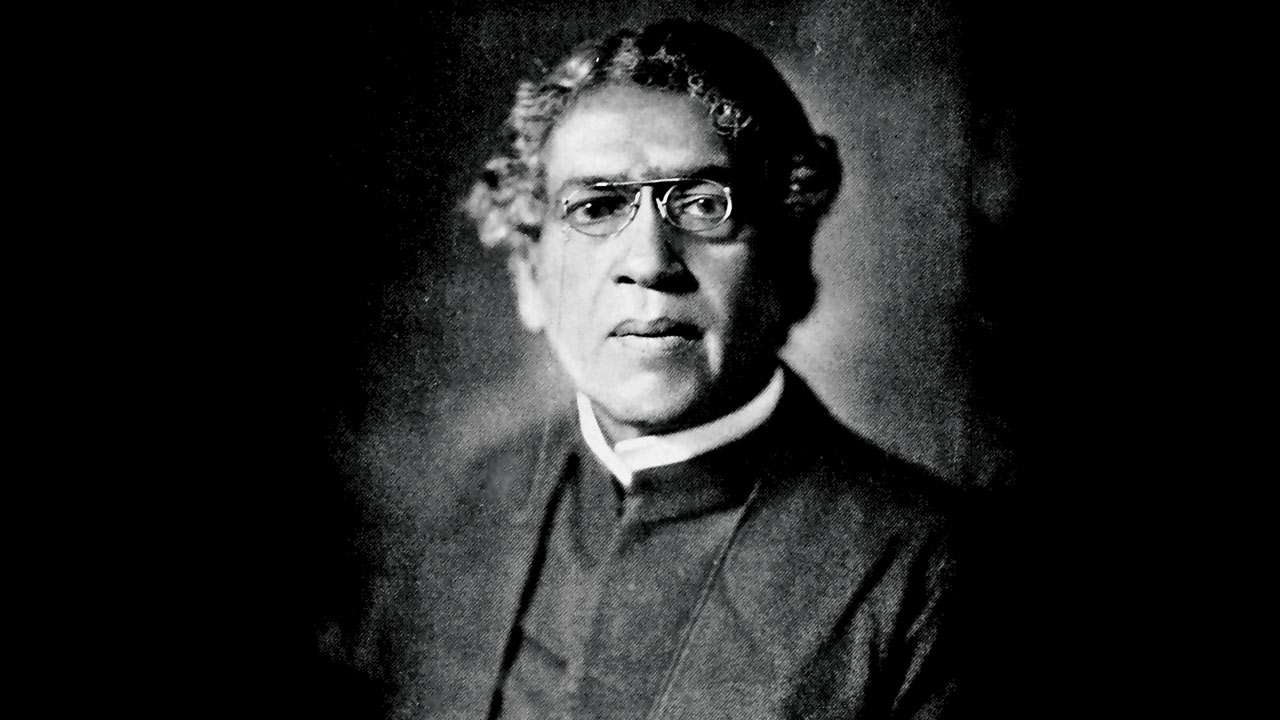

“They who behold the One, in all the changing manifoldness of the universe, unto them belongs the eternal truth, unto none else, unto none else.”
"The true laboratory is the mind, where behind illusions we uncover the laws of truth."
Sir Jagadish Chandra Bose CSI CIE FRS was a biologist, physicist, botanist and an early writer of science fiction. He pioneered the investigation of radio and microwave optics, made significant contributions to plant science, and laid the foundations of experimental science in the Indian subcontinent.
Jagdish Chandra Bose was one of the ‘fathers of radio science’:
There is a common misconception that the famous biophysicist is in some way connected with Bose, the modern technology company which makes high-quality headphones and sound equipment.
This is not the case. Bose was, however, a significant figure in the creation of modern radio and sonic technology – while also having a keen interest in botany.
During years of research, Bose made outstanding progress in bringing remote wireless signalling to life and invented an early version of wireless telecommunication.
Bose would have been able to reap significant financial and commercial benefit from these discoveries had he opted to cash in – but he rejected wealth and made his inventions public, to allow others to develop his research.
In 1997, the Institute of Electrical and Electronic Engineers named Bose as a “father of radio science”
There is a crater on the moon named after him:
A small impact crater on the far side of the Moon is named after Bose.
The Bose Crater is located close to Crater Bhabha and Crater Adler and has a reported diameter of 91 kilometres.
The outer rim of the Bose Crater has become worn and the edges rounded by impacts, although the shape of the site has been well-preserved.
The crater was named after Bose to recognise his achievements in the field of wireless telecommunications in particular, which are said to have paved the way for satellite communication.

