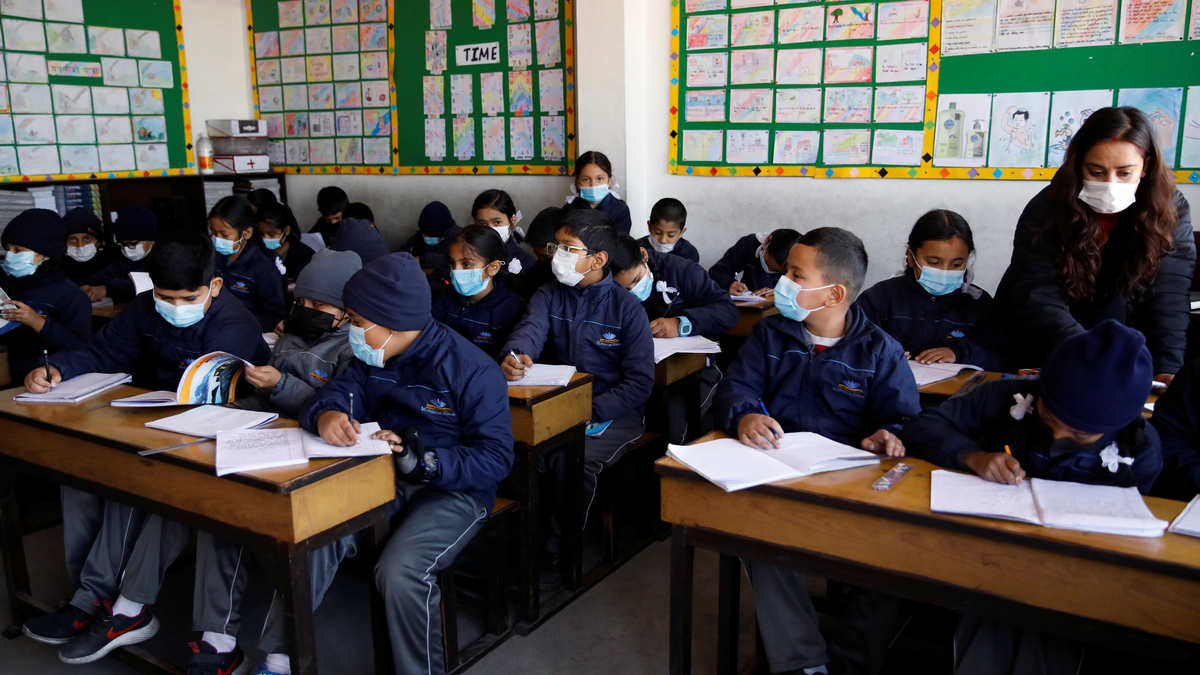

We need poetry. We really do. Poetry promotes literacy, builds community, and fosters emotional resilience. It can cross boundaries that little else can. Today is Teachers Day. Bring some poetry into your hearts, homes, classrooms and schools. Here are few reasons why we need poetry in our schools.
Reason #1: Poetry helps us know each other and build community. Poetry can allow kids to paint sketches of their lives, using metaphor, imagery and symbolic language to describe painful experiences, or parts of themselves that they're not ready to share. Poetry allows kids to put language to use-to make it serve a deep internal purpose, to break rules along the way (grammar, punctuation, capitalization -- think of e.e. cummings) and to find voice, representation, community perhaps.
Reason #2: When read aloud, poetry is rhythm and music and sounds and beats. Young children -- babies and preschoolers included -- may not understand all the words or meaning, but they'll feel the rhythms, get curious about what the sounds mean and perhaps want to create their own. Contrary to popular belief amongst kids, boys get really into poetry when brought in through rhythm and rhyme. It's the most kinesthetic of all literature, it's physical and full-bodied which activates your heart and soul and sometimes bypasses the traps of our minds and the outcome is that poetry moves us. Boys, too.
Reason #3: Poetry opens venues for speaking and listening, much neglected domains of a robust English Language Arts curriculum. Think spoken word and poetry slams. Shared in this way, poetry brings audience, authentic audience, which motivates reluctant writers (or most writers, for that matter) .
Reason #4: Poetry has space for English Language Learners. Because poems defy rules, poetry can be made accessible for ELLs -- poems can be easily scaffolded and students can find ways of expressing their voices while being limited in their vocabulary. Furthermore, poetry is universal. ELLs can learn about or read poetry in their primary language, helping them bridge their worlds. (This is not quite so true for genres such as nonfiction text that get a lot of airtime these days.)
Reason #5: Poetry builds resilience in kids and adults; it fosters Social and Emotional Learning. A well-crafted phrase or two in a poem can help us see an experience in an entirely new way. We can gain insight that had evaded us many times, that gives us new understanding and strength. William Butler Yeats said this about poetry: "It is blood, imagination, intellect running together...It bids us to touch and taste and hear and see the world, and shrink from all that is of the brain only." Our schools are places of too much "brain only;" we must find ways to surface other ways of being, other modes of learning. And we must find ways to talk about the difficult and unexplainable things in life -- death and suffering and even profound joy and transformation.
On this topic, Jeanette Winterson, a poet and writer, says this:
"...When people say that poetry is a luxury, or an option, or for the educated middle classes, or that it shouldn't be read in school because it is irrelevant, or any of the strange and stupid things that are said about poetry and its place in our lives, I suspect that the people doing the saying have had things pretty easy. A tough life needs a tough language - and that is what poetry is. That is what literature offers -- a language powerful enough to say how it is. It isn't a hiding place. It is a finding place."
(From: edutopia.org Blog)
A final suggestion about bringing poetry into your lives: don't analyze it, don't ask others to analyze it. Don't deconstruct it or try to make meaning of it. Find the poems that wake you up, that make you feel as if you've submerged yourself in a mineral hot spring or an ice bath; find the poems that make you feel (almost) irrational joy or sadness or delight. Find the poems that make you want to roll around in them or paint their colors all over your bedroom ceiling. Those are the poems you want to play with -- forget the ones that don't make sense. Find those poems that communicate with the deepest parts of your being and welcome them in.