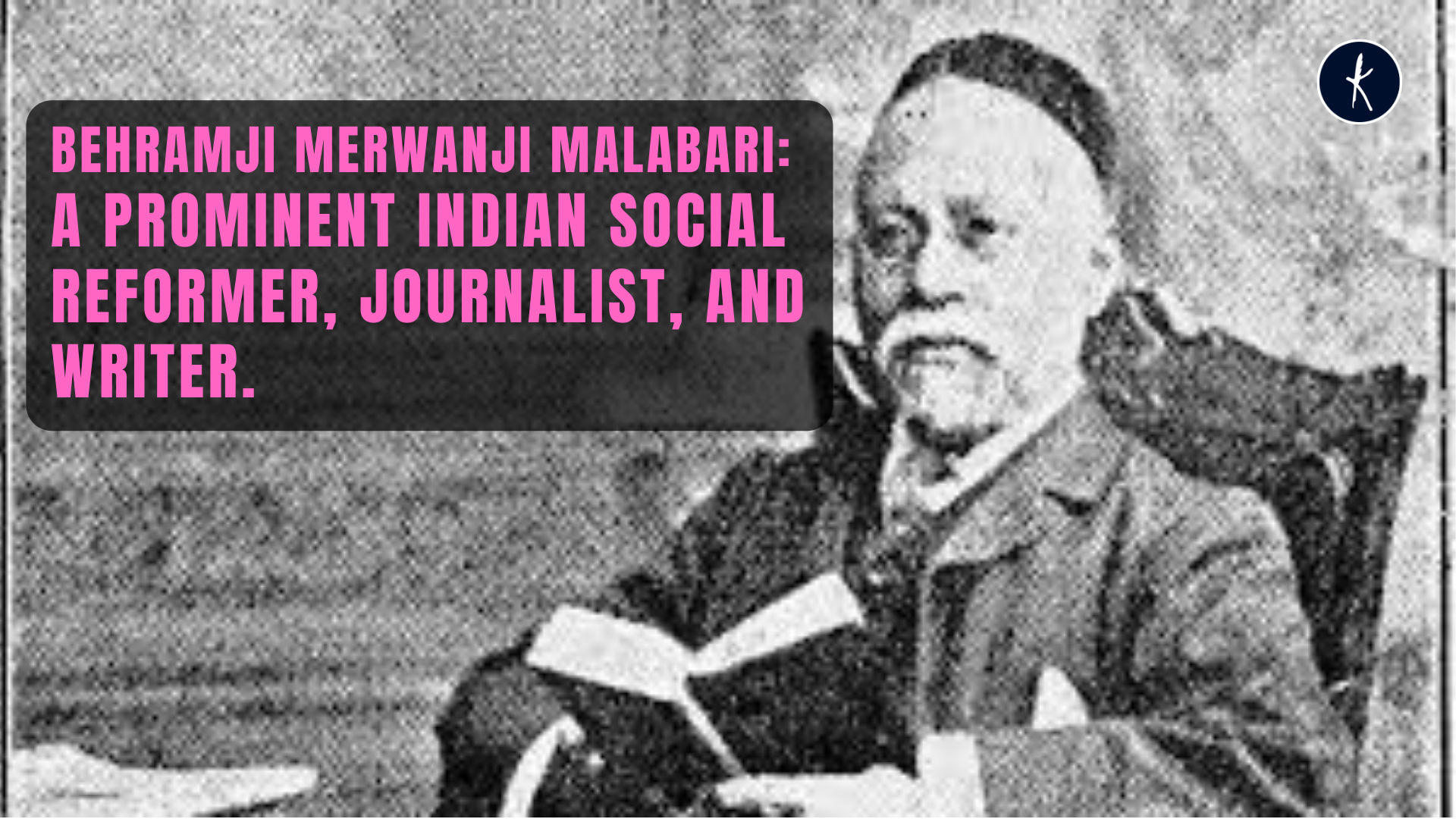

Behramji Merwanji Malabari was a prominent Indian social reformer, journalist, and writer who played a significant role in the fight against social evils such as child marriage, female infanticide, and the purdah system. Born in 1853 in Bombay, Malabari was a member of the Parsi community and received his education in England.
Malabari's interest in social reform was sparked by his experiences in England, where he witnessed the suffrage movement and the fight for women's rights. Upon his return to India, he became involved in the Indian National Congress and began writing articles for various newspapers and journals on social issues.
One of Malabari's most significant contributions to Indian society was his campaign against the purdah system, which required women to cover themselves completely and remain secluded from society. Malabari argued that the purdah system was a form of oppression that prevented women from participating in public life and hindered their education and development. He founded the Purdah Nashin Mahila Shiksha Mandal, an organization that provided education and vocational training to women who had been forced into purdah.
Malabari also worked to combat child marriage and female infanticide, which were prevalent in many parts of India at the time. He wrote extensively on these issues and advocated for legal reforms to protect women and children.
In addition to his social reform work, Malabari was also a prolific writer and journalist. He wrote several books, including "The Indian Eye on English Life" and "The Indian Musalmans," which provided insights into Indian culture and society. He also founded and edited several newspapers, including the Bombay Chronicle and the Indian Spectator.
Malabari's contributions to Indian society were recognized during his lifetime, and he was awarded the title of Rai Bahadur by the British government in 1894. He continued to work for social reform until his death in 1912.
In conclusion, Behramji Merwanji Malabari was a visionary social reformer who fought tirelessly for the rights of women and children in India. His work to combat the purdah system, child marriage, and female infanticide paved the way for future generations of activists and helped to create a more just and equitable society. His legacy continues to inspire social reformers in India and around the world.|