
Pingali Venkayya (2 August 1876 – 4 July 1963) was an Indian freedom fighter and the designer of the flag on which the Indian national flag was based. He was born at Bhatlapenumarru, near Machilipatnam, in what is now the Indian state of Andhra Pradesh.
Various so-called national flags had been used by members of the Indian independence movement prior to independence being achieved in 1947. Venkayya's version was first designed for the Indian National Congress and subsequently modified in 1947.
According to The Hindu, "Pingali Venkayya was an authority in geology, agriculture and also an educationist who set up an educational institution in Machilipatnam. He, however, died in poverty in 1963 and was largely forgotten by the society and by his own party, the Congress." A postage stamp was issued to commemorate him in 2009 and in 2011 it was proposed that he be posthumously awarded the Bharat Ratna. The outcome of that proposal is not known.
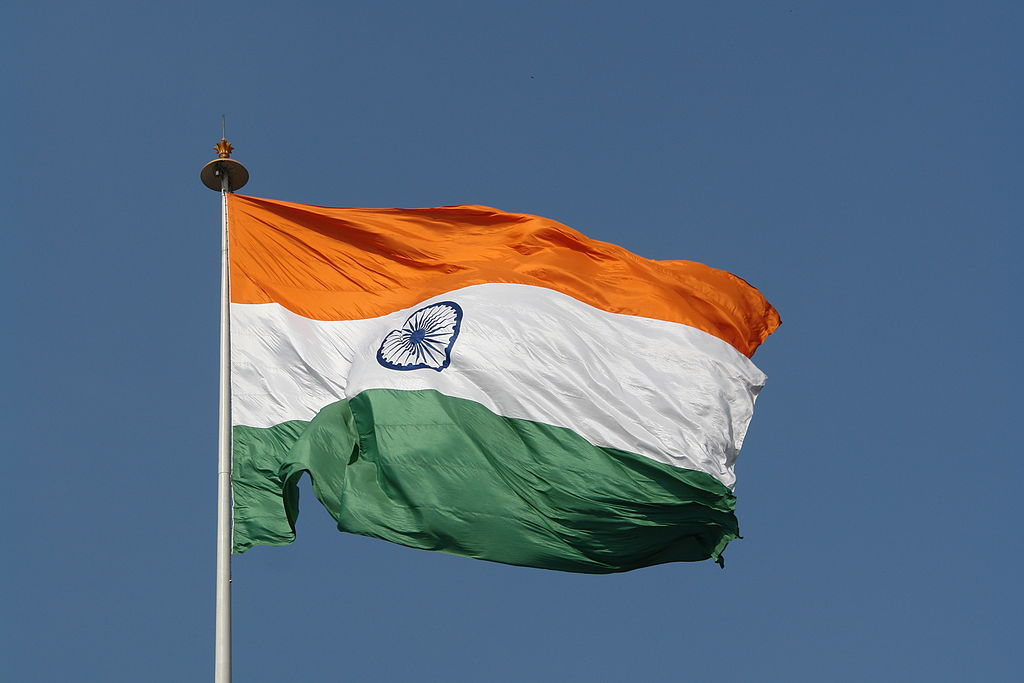
The National Flag of India is a horizontal rectangular tricolour of India saffron, white and India green; with the Ashoka Chakra, a 24-spoke wheel, in navy blue at its centre. It was adopted in its present form during a meeting of the Constituent Assembly held on 22 July 1947, and it became the official flag of the Dominion of India on 15 August 1947. The flag was subsequently retained as that of the Republic of India. In India, the term "tricolour" (Hindi: तिरंगा, romanized: Tiraṅgā) almost always refers to the Indian national flag. The flag is based on the Swaraj flag, a flag of the Indian National Congress designed by Pingali Venkayya. READ MORE - WIKIPEDIA