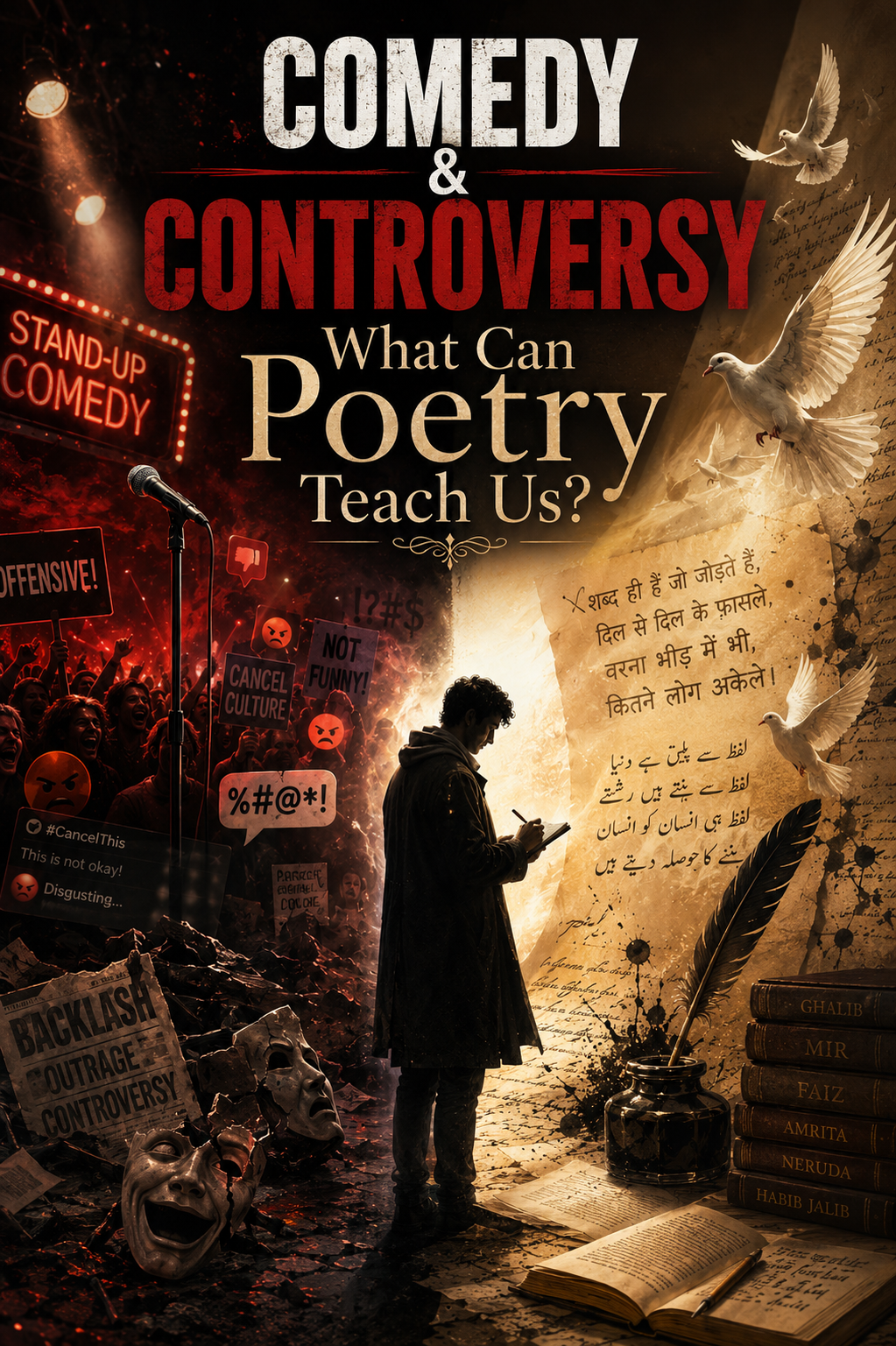

Comedy and Controversies: What Poetry Teaches Us
Stand-up comedy, in recent years, has been facing continuous criticism over its inappropriate and vulgar statements. There is a war going on between social standards and individual liberty. It is a debate about what is "acceptable humor" in society, what morals are in society, what the role of an art form is, and what the ethical standards of art are. In these contexts, poetry can teach us a big lesson from its journey as an art.
Poetry is also an art and provides entertainment to the audience. It also has hasya ras as one of its body parts, but still poetry takes social and political responsibility on its shoulders. It provides laughter and entertainment, but not at the cost of its ethics and standards. Poetry teaches stand-up comedy that it must have a constructive goal towards society along with entertainment. Poetry also uses bold subjects while maintaining dignity. The random vulgarity and sexualization of things in comedy, in the name of expression and entertainment, is not a justified claim.
This does not mean that poetry is not a vocal art and that it only expresses itself under the surveillance of society and the state. In reality, poetry also faces censorship from the state and society, but this expression is in favor of mankind and flows in the direction of liberalism and new thoughts. For example, Madhushala by Harivansh Rai Bachchan, in its initial times, faced severe criticism, but it was aimed at a bigger goal and therefore became widely successful. The same goes for the verses of Kabir.
Poetry also teaches the way of choosing the right word in the right sentence, and that is an art, because you can deliver your message or idea without hurting others through the correct choice of words. It also teaches how to choose the correct word to challenge the ego of the political or social establishment.
Poetry also teaches tolerance to society and the audience. Sometimes comedy is on the right path, but intolerant and conservative groups in society silence its voice, and that is also not a healthy practice. Therefore, poetry teaches tolerance and acceptance of new ideas, even if they do not match your way of thinking. Poetry teaches us to agree to disagree, and that is a very democratic thought.
Conclusion
In conclusion, the debate around comedy and controversies is not only about freedom or restrictions but also about responsibility and purpose. Poetry teaches that an art form can be entertaining, bold, and critical while still maintaining dignity, ethics, and social consciousness. At the same time, poetry reminds society to remain tolerant towards new ideas and expressions. Therefore, the future of comedy lies not in vulgarity or censorship, but in balancing creative liberty with constructive cultural responsibility.