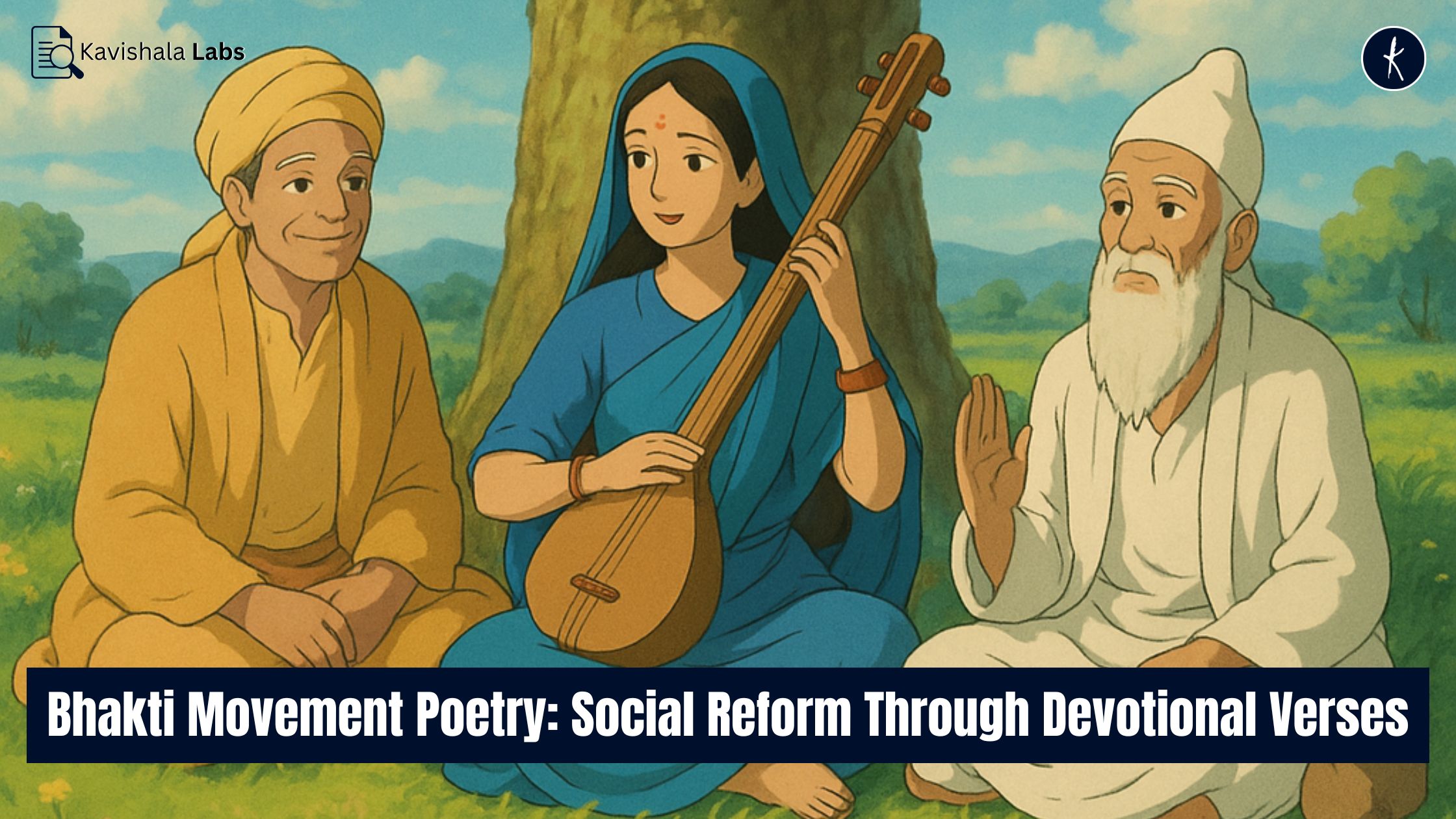

The Bhakti movement, which flourished in India between the 8th and 17th centuries, was a transformative spiritual and social force. It emphasized personal devotion to a formless divine, challenging established religious hierarchies and societal norms. Central to this movement were poet-saints like Kabir, Mirabai, and Tulsidas, whose vernacular verses not only deepened spiritual engagement but also catalyzed social reform by promoting inclusivity and questioning orthodox practices.
Kabir: The Weaver of Unity
Kabir (15th century), a mystic poet and weaver by profession, is renowned for his profound couplets (dohas) compiled in the Bijak. His poetry transcended religious boundaries, advocating for a direct connection with the divine beyond ritualistic confines. He critiqued both Hindu and Muslim orthodoxy, emphasizing the futility of external rituals and the importance of inner realization.
"Dui Jagdish kahan te aaya, kahu kawne bharmaaya. Allah Ram Kareem, Keso, Hari Hazrat naam dharaya."
(Where did these two gods come from? Who created this confusion? Allah, Ram, Kareem, Keshav, Hari, Hazrat are all names for the same.)
— Bijak
Kabir's teachings promoted social equality, challenging the caste system and advocating for a society based on love and mutual respect. His emphasis on a formless God and inner devotion resonated across diverse communities, fostering a sense of unity and shared spiritual pursuit.
Mirabai: The Voice of Devotional Defiance
Mirabai (c. 1498–1547), a Rajput princess turned saint-poetess, is celebrated for her passionate devotion to Lord Krishna. Her lyrical compositions, primarily in Rajasthani and Braj dialects, express deep spiritual longing and an unwavering commitment to her divine beloved.
"Payoji maine Ram Ratan dhan payo."
(I have received the jewel of God's name.)
Mirabai's poetry not only reflects her personal spiritual journey but also serves as a form of social rebellion. By renouncing royal privileges and societal expectations, she challenged patriarchal norms and asserted the right of women to spiritual autonomy. Her association with the saint Ravidas, a Dalit, further underscores her commitment to social equality and the transcendence of caste barriers.
Tulsidas: Bridging Devotion and Social Ethics
Tulsidas (1532–1623) is best known for composing the Ramcharitmanas, a retelling of the Sanskrit Ramayana in the vernacular Awadhi language. By making the epic accessible to the common people, he played a pivotal role in popularizing the ideals of devotion, righteousness, and moral conduct.
Tulsidas's works emphasize the importance of personal devotion (bhakti) and ethical living. His portrayal of Lord Rama as the embodiment of dharma (righteousness) provided a moral framework that appealed to a broad audience, transcending caste and class distinctions. Through his poetry, Tulsidas fostered a sense of shared cultural and spiritual identity among diverse communities.
The Bhakti movement's emphasis on personal devotion and its challenge to established social hierarchies found powerful expression in the poetry of Kabir, Mirabai, and Tulsidas. Their works not only enriched Indian spiritual literature but also served as instruments of social reform, advocating for equality, inclusivity, and inner spiritual realization. By composing in vernacular languages and addressing universal themes, these poet-saints made profound spiritual insights accessible to all, leaving a lasting impact on Indian society.