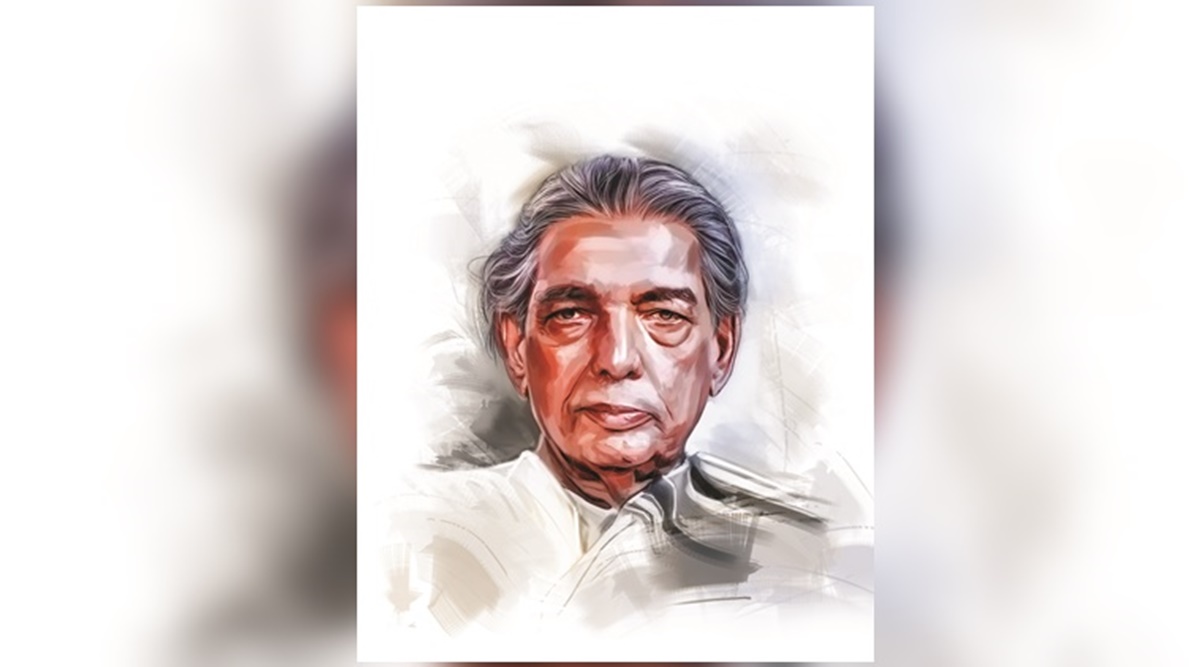

At age 11, Kaifi Azmi composed his first poem, a ghazal-style piece.
इतना तो ज़िंदगी में किसी के ख़लल पड़े
हंसने से हो सुकून न रोने से कल पड़े
जिस तरह हंस रहा हूँ मैं पी पी के गर्म अश्क
यूं दूसरा हंसे तो कलेजा निकल पड़े
इक तुम कि तुम को फ़िक्र-ए-नशेब-ओ-फ़राज़ है
इक हम कि चल पड़े तो बहर-हाल चल पड़े
साक़ी सभी को है ग़म-ए-तिश्ना-लबी मगर
मय है उसी की नाम पे जिस के उबल पड़े
मुद्दत के बाद उस ने जो की लुत्फ़ की निगाह
जी ख़ुश तो हो गया मगर आँसू निकल पड़े
Inspired by Gandhi's 1942 Quit India freedom movement, he later left for Bombay (now Mumbai) to write for an Urdu newspaper. He then published his first collection of poems, Jhankar (1943), as well as became a member of the influential Progressive Writers’ Association that used writing to try to achieve socioeconomic reforms.
Azmi was prolific and won numerous awards for his contributions, including three Filmfare Awards for Garm Hawa (“Scorching Winds,” 1973), the prestigious Padma Shri Award for Literature and Education (1974), and one of India’s highest literary honors, the Sahitya Akademi Fellowship (2002).
In one of his early and most famous poems, “Aurat,” Amzi advocated for women’s equality, one of the causes he championed in his lifetime. He also founded the NGO Mijwan Welfare Society (MWS) to support various educational initiatives to improve the lives of rural women and families, and to this day, MWS continues its work in the spirit of its founder. (Google doodle)
Kaifi Azmi was an Indian poet, songwriter, and social change advocate. Azmi was one of the most popular 20th century poets, with his work ranging from love poems, activist verses to Bollywood songs lyrics and screenplays.