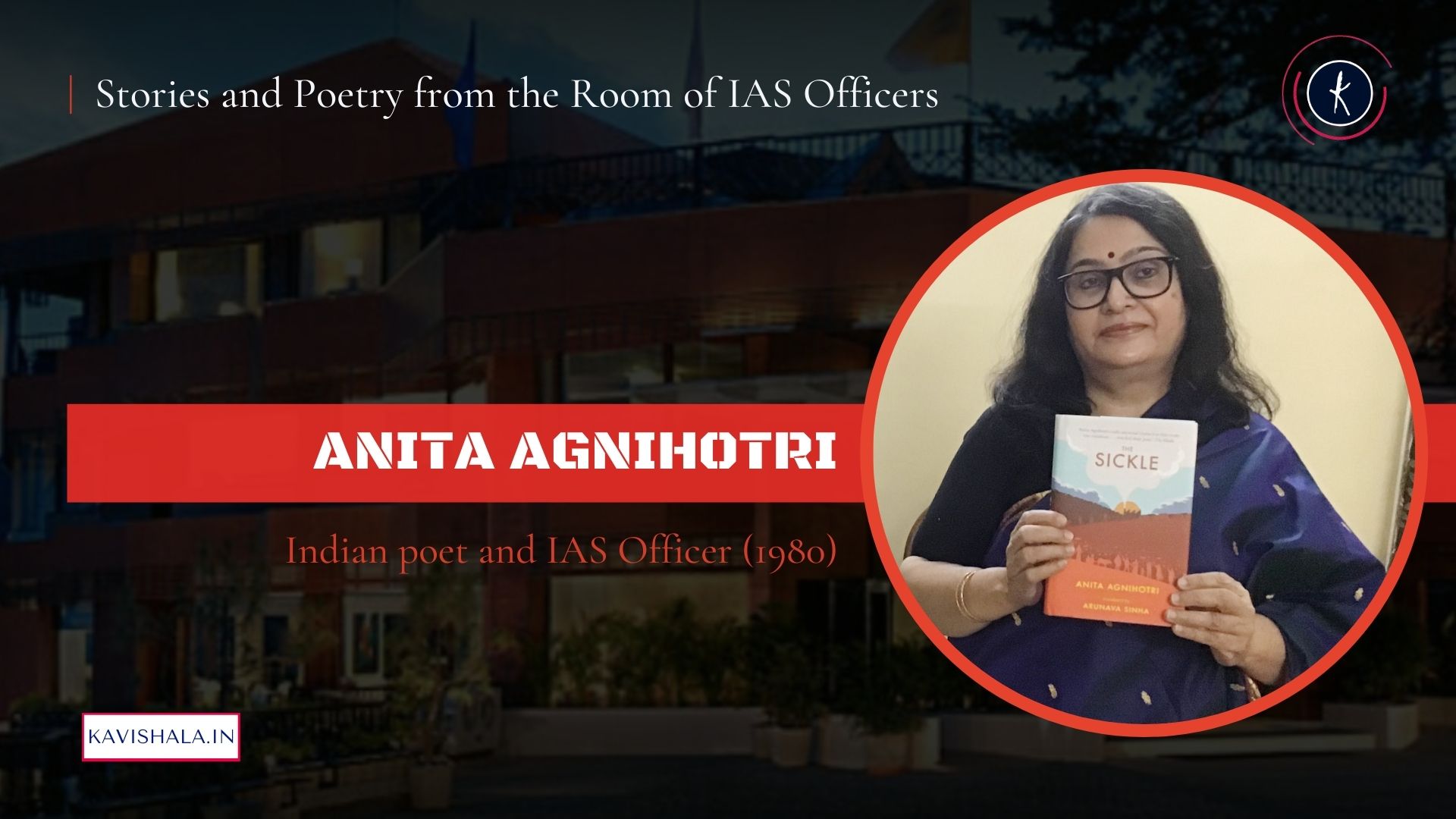
Through her poetry and stories, Anita Agnihotri listens to those who often go unheard

[Stories and Poetry from the Room of IAS Officers]
[আগুন লাগা শরীর নিয়ে যদি - কবি অনিতা অগ্নিহোত্রী]
আগুন-লাগা শরীর নিয়ে যদি
জ্বলতে জ্বলতে তোমার বাড়ি আসি
ভেজা বাতাস জড়িয়ে দিও গায়ে
ভয় পাবে না, ঘরপোড়া সন্ন্যাসী
সরিয়ে নিও পুড়তে পারে যা যা
আসবাব আর জীবন-জোড়া ফাঁকা
তুষের কাঁথা খড়ের কঙ্কালে,
ঝাঁপির বেত, ঘাসের আংরাখা।
জ্বলছে জ্বলছে সলতে-পোড়া প্রাণ
পুড়ছে হাড় পুড়ছে শিরদাঁড়া
চোখের কোটর আলজিভ আর নাভি
হতভম্ব দাঁড়িয়ে আছে পাড়া।
এক ফোটা জল, এক ছিঁটে জল কেউ
দেয় না, কত তেষ্টা জীবন জুড়ে
একটু নরম ছায়ার অন্য পাখি
উড়ছে ধু-ধু আগুন-পাঁচিল ঘুরে।
তোমার কাছে নয়নভরা জল
তোমার কাছে পদ্মজাগা বিলও
ভেজা-বাতাস, বৃষ্টি-নেভা রাত,
তোমার কোলেই মরণ লেখা ছিল।
আগুন-লাগা শরীর নিয়ে যদি
জ্বলতে জ্বলতে তোমার কাছে যাই,
পাগল নদী জড়িয়ে দেবে গায়ে ?
তারায় তারায় ছড়িয়ে দেবে ছাই ?
Anita Agnihotri is an Indian Bengali writer and poet. She has been translated into major Indian and foreign languages, including but not limited to English, Swedish and German. She is also a retired civil servant (Indian Administrative Service 1980 batch). She lives in India. Anita Agnihotri (nee Chatterjee) was born and spent her childhood in Kolkata. She earned a Bachelor of Arts in Economics at Presidency College in Kolkata, and graduated with a Masters in Economics from Calcutta University. She was selected for the IAS in 1980 to the Odisha cadre. She went on to have a 37 year career in the civil service. As an IAS, she was Collector of Sundargarh district of Odisha and was Principal Secretary in departments such as Textiles and Industries. In 1991, she took a sabbatical from IAS and completed Masters in Development Economics from the University of East Anglia, Norwich, UK. At the centre, she was a joint DG in Directorate General of Foreign Trade (DGFT) between 1996 and 2001, and then Development Commissioner of SEEPZ, Mumbai in 2008-2011 at the rank of Joint Secretary. She was also the member secretary of the National Commission for Women. She retired in 2016 as Secretary, Ministry of Social Justice and Empowerment, Government of India.
Anita commenced writing at an early age. The writer Bimal Kar encouraged her to pursue a literary career . As a school student, she used to write for renowned filmmaker Satyajit Ray’s children's magazine Sandesh, something that gave her confidence and also shaped her literary sensibilities. Her writing has been compared with that of noted Bengali writer Mahasweta Devi. Anita’s concerns are also the struggles, the exploitation, the deprivation in the lives and environment of the poor and downtrodden. The following works of note illustrate this. In 1991, on a sabbatical from the IAS to pursue a course on rural development in UK’s Anglia Ruskin University, she wrote the novella 'Mahuldiha Days' capturing the incidents that she had encountered as an administrator in Odisha’s Mahuldiha. In 2015, Anita’s book Mahanadi was published. The eponymous book is written with the river Mahanadi in the first person. It tells the story of a river that flows through some of the least developed (and poorest) regions of Chhattisgarh and Odisha, and the profound influence of the river on the regions society, culture and economics.
কবি অনিতা অগ্নিহোত্রীর কবিতা
[সূর্য-ডোবা দেখতে গিয়ে - কবি অনিতা অগ্নিহোত্রী]
সেই মেয়েটি হারিয়ে গেছে সিঁথির মোড়ে
সূর্যডোবা দেখতে গিয়ে। সেই মেয়েটি
ক্রন্দসী-তীর ছাড়িয়ে গেছে মেঘান্তরে।
ঘাসের ঘুঙুর লোটায় পায়ের। রূপোর কাঠি
শিয়র বাগে। কে আর তাকে মধ্যরাতে
জাগায়, সে তো ছাপিয়ে গেছে এই সময়ের
দ্বন্দ্ব-দোলন। বনের দু’হাত জ্যোত্স্না-পাতে
পিছল, তাকে ডাকতে পিছু শঙ্কা পথের।
মা লেধেছে, পা ধুবি আয়, বাবা সাঁকোর
কাছেই ছিল, হাত ধরবে। ভাই জানালায়
দাঁড়িয়ে ভাবে গল্প বাকি। বোনটি তো ওর
এলই না আর : শিহর ওঠে রাত ইঁদারায়।
নৈর্ঋতে চুল শুকোচ্ছিলো লাল-রঙা রোদ,
ঝাপটেছিল পাখা কিছু উদ্বাহু গাছ :
দিক্ হারানোর ঝঞ্ঝাবায়ে ও কোন অবোধ
ছাড়িয়ে গেল আকাশ রোদের আনাচ-কানাচ,
সূর্য-ডোবা দেখতে গিয়ে রাতের তোড়ে
সেই মেয়েটি তলিয়ে
গেছে সিঁথির মোড়ে॥
[কাগজকুড়ানিদের জন্য গাথা - কবি অনিতা অগ্নিহোত্রী]
আমার মতো তুমিও যদি চুমুক দিতে
আয়না-ভাঙা পারার মতো বিষের কাপে
তুমিও দেখতে কুঁচকে যাচ্ছে রোদের কাঁথা
ছিটকে উঠছে রক্তমাখা ছিন্ন হাওয়াই
তুমিও দেখতে জীবন ঠোঁটে রুচছে না আর
হাড়ে মধ্যে শীতের ছুরি, পায়ের নীচে
কনকনে রাত, দিনের বেলা জুড়িয়ে বরফ
রোদ ও আকাশ সঙ্গে তাদের অট্টহাসি
সবচে বড় শ্রেণীশত্রু কারা : কাগজকুড়ানিরাই
বলেন নাগর : গুলিবারুদ বরাত দেওয়া হয়নি বলে
লাঠি এবং রক্ষিদলেই চালাতে হয়। রাত্রে তারা
স্তব্ধ শহর শাসন করে : উড়ালপুলের বিষ-কোটরে।
যদিও মানা উড়ালপুলে পদারোহণ
কুড়ানিরাই ছড়িয়ে পড়ে সদলবলে : এবং করে সমাজদূষণ
ফেলে দেওয়া আবর্জনা বাছতে বসে, চাঁদের আলোয়
শুকায় তাদের, খাদ্যবস্তু থাকলে সেঁটে কামড়িয়ে খায়
এখন তারা শক্ত। শীতল। মৃতদেহে। শহর আকাশ
দিন পনোরে বর্ষেছে শীত, রৌদ্রবিহীন