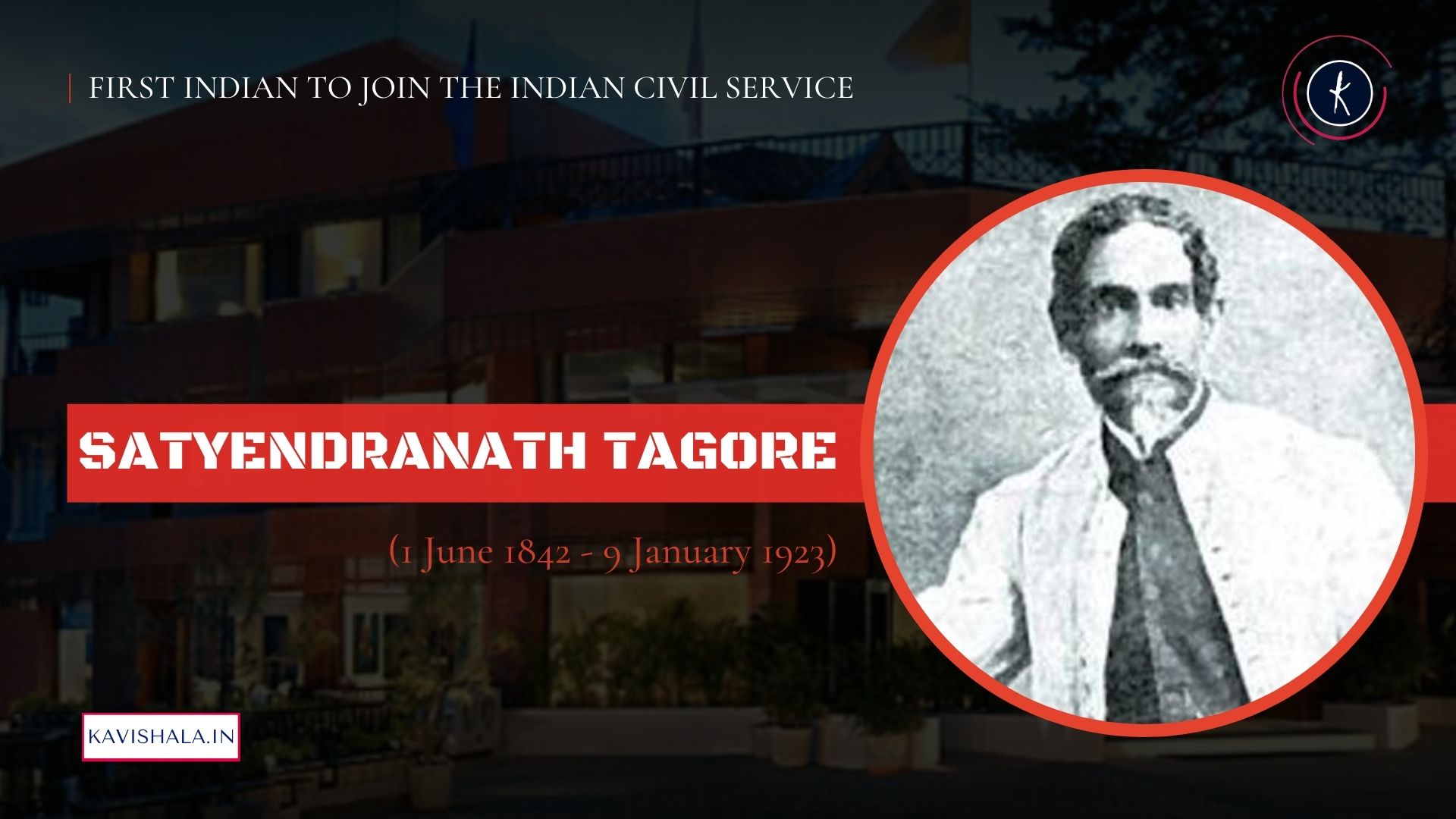

জন্মদিনের শ্রদ্ধার্ঘ্য জানাই শ্রী সত্যেন্দ্রনাথ ঠাকুরকে। ঠাকুর পরিবারের অন্যতম উল্লেখ্য ব্যক্তিত্ব তিনি। সাহিত্যে, কাব্যে, এমনকি ব্রিটিশ শাসিত বাংলাকে স্বাধীন করতে তাঁর অবদান গুরুত্বপূর্ণ।
Satyendranath Tagore was the first Indian to join the Indian Civil Service. He was an author, song composer, linguist and activist. He made a significant contribution towards the emancipation of women in Indian society during the British Raj. He was the second eldest brother of Rabindranath Tagore, the only Indian to be awarded a Nobel Prize in Literature.
The Tagore family were strong Indian patriots. In an age when it was de rigueur to imitate Western dress habits and to speak the English language in Indian high society, the Tagores kept Indian dress and chose to cultivate Bengali. While admiring the positive qualities he considered British society to possess, Satyendranath himself took the view it was necessary to reform and cultivate the Indian society which already existed. He was one of the people associated with the Hindu Mela, whose purpose was to awaken this sense of patriotism in the lives of ordinary Indians. When the first session was held in April 1867, he was away in western India. However, he was present in Calcutta for the second session in 1868. He composed the song mile sabe Bharat santan, ektan gaho gaan (unite, India's children, sing in unison) for the occasion, which was hailed as the first national anthem of India. He wrote a number of other such patriotic songs.
Satyendranath had deep regard for his father Debendranath and the religion he had taken so much pain to develop. At a considerably young age, he and Monomohun Ghose accompanied Keshub Chunder Sen on his campaign to win over the younger generation at Krishnanagar College. In England, even when he was busy with other work, he found time to preach the ideals of Brahmo Samaj. Later, when he was posted in Ahmedabad, he sent a report about Brahmo Samaj to Max Müller. It was included in Müller's biography, written by his wife.
Works: Sushila O Birsingha (play, 1867), Bombay Chitra (1888), Nabaratnamala, Strisvadhinata, Bauddhadharma (1901), Amar Balyakatha O Bombay Prabas (1915), Bharatvarsiya Ingrej (1908), Raja Rammohan Roy.