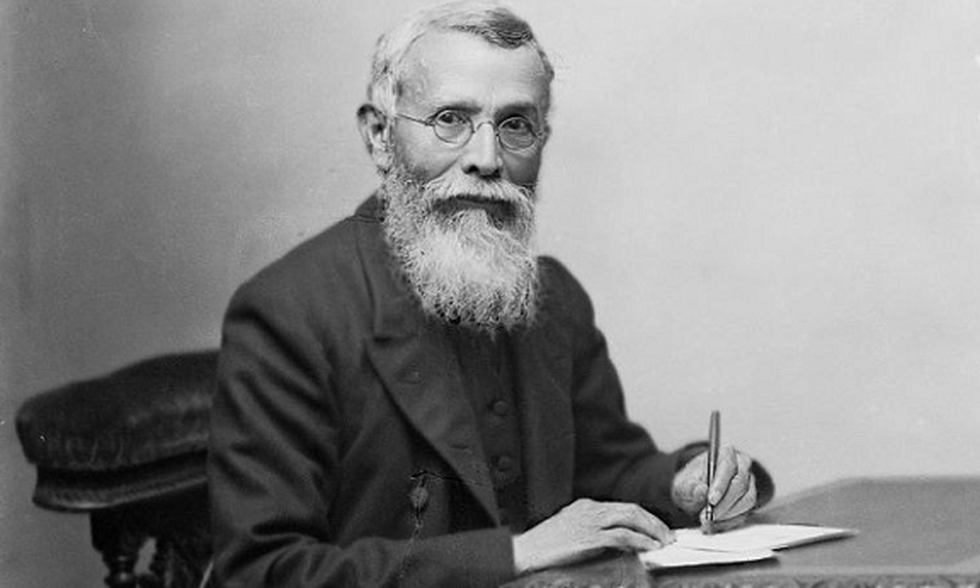

Dadabhai Naoroji is regarded as one of the most important Indians during the independence movement. In his writings, he considered that the foreign intervention into India was clearly not favourable for the country.

Further development was checked by the frequent invasions of India by, and the subsequent continuous rule of, foreigners of entirely different character and genius, who, not having any sympathy with the indigenous literature – on the contrary, having much fanatical antipathy to the religion of the Hindus – prevented its further growth. Priest-hood, first for power and afterwards from ignorance, completed the mischief, as has happened in all other countries.

Naoroji is remembered as the "Grand Old Man of Indian Nationalism"

Mahatma Gandhi wrote to Naoroji in a letter of 1894 that "The Indians look up to you as children to the father. Such is really the feeling here." Bal Gangadhar Tilak admired him; he said:

If we twenty eight crore of Indians were entitled to send only one member to the British parliament, there is no doubt that we would have elected Dadabhai Naoroji unanimously to grace that post.

Here are the significant extracts taken from his speech delivered before the East India Association on 2 May 1867 regarding what educated Indians expect from their British rulers.

The difficulties thrown in the way of according to the natives such reasonable share and voice in the administration of the country ad they are able to take, are creating some uneasiness and distrust. The universities are sending out hundreds and will soon begin to send out thousands of educated natives. This body naturally increases in influence...


"In this Memorandum I desire to submit for the kind and generous consideration of His Lordship the Secretary of State for India, that from the same cause of the deplorable drain [of economic wealth from India to England], besides the material exhaustion of India, the moral loss to her is no less sad and lamentable . . . All [the Europeans] effectually do is to eat the substance of India, material and moral, while living there, and when they go, they carry away all they have acquired . . . The thousands [of Indians] that are being sent out by the universities every year find themselves in a most anomalous position. There is no place for them in their motherland . . . What must be the inevitable consequence? . . . despotism and destruction . . . or destroying hand and power. "

In this above quotation he explains his theory in which the British used India as a drain of wealth.