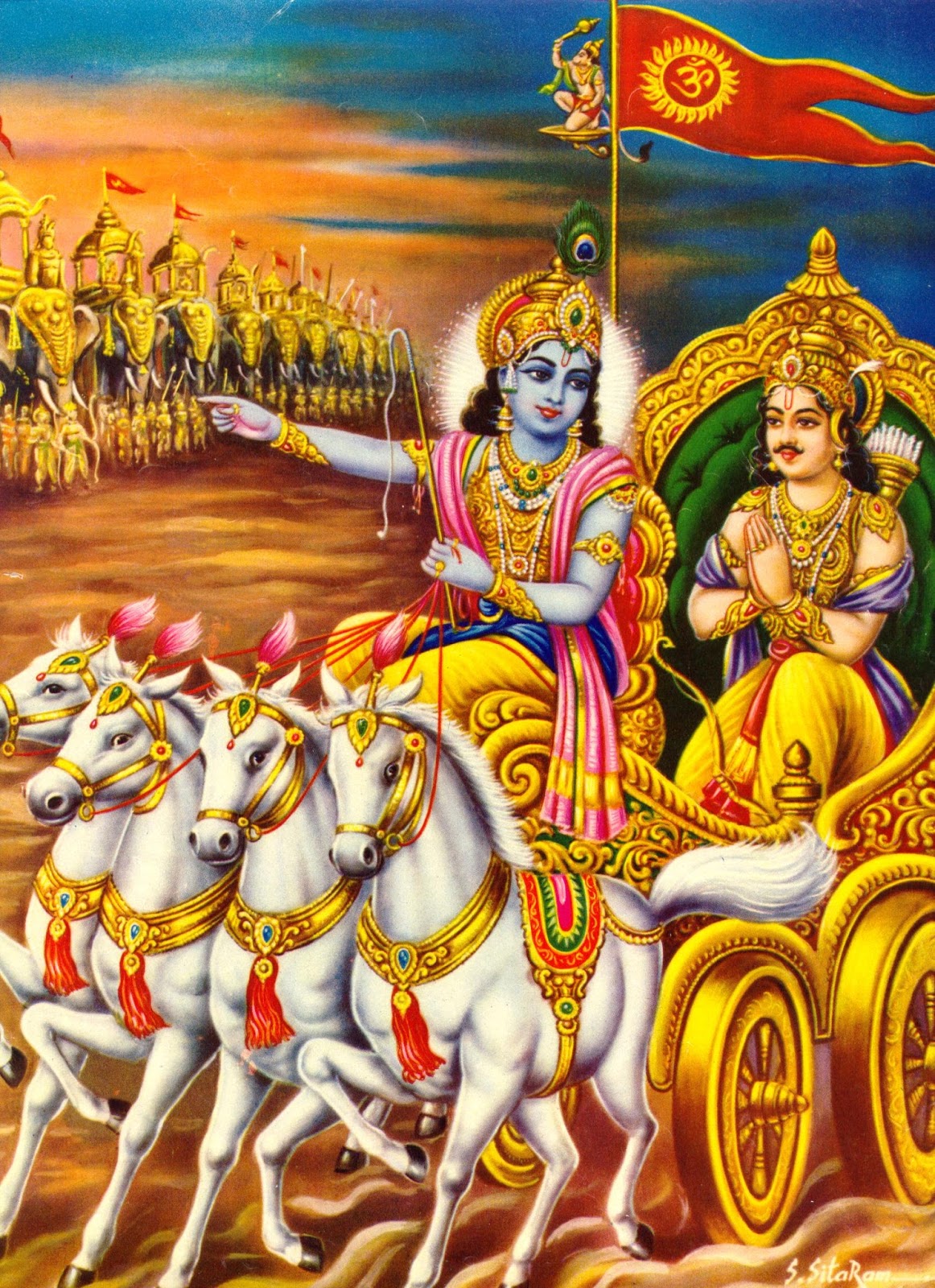
Chapter 1.14 tatah shvetairhayairyukte
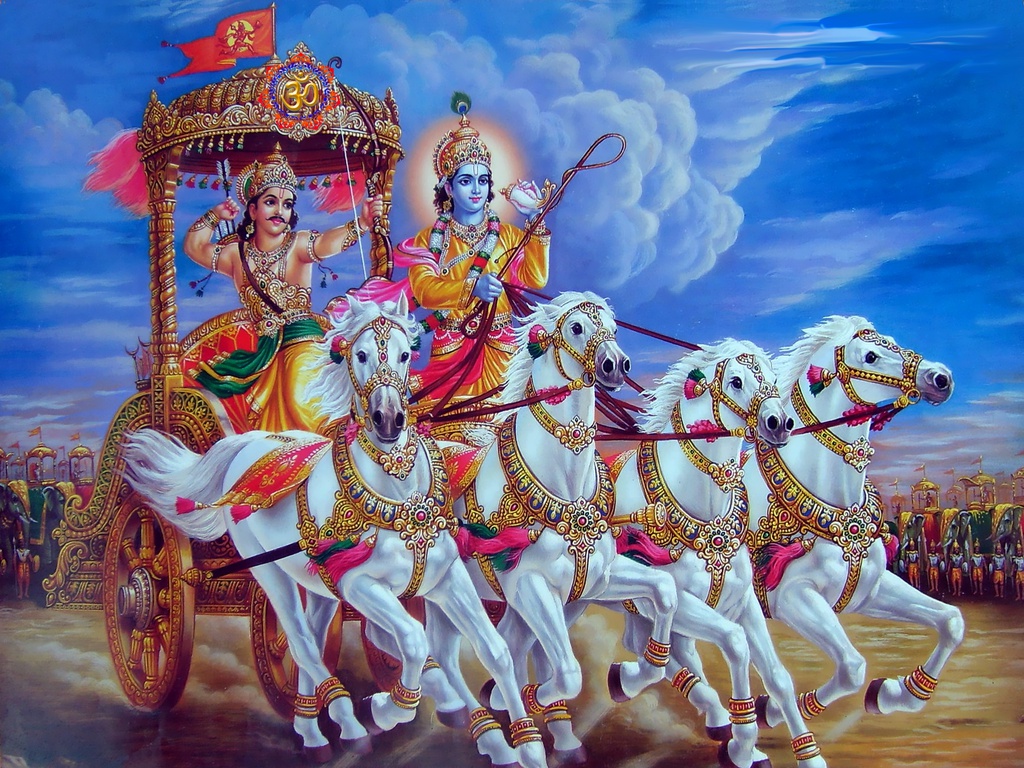
ततः श्वेतैर्हयैर्युक्ते महति स्यन्दने स्थितौ । माधवः पाण्डवश्चैव दिव्यौ शङ्खौ प्रदध्मतुः ॥ १-१४॥
tataḥ śvetairhayairyukte mahati syandane sthitau mādhavaḥ pāṇḍavaścaiva divyau śaṅkhau pradadhmatuḥ
Then, also Madhava and the son of Pandu, seated in their magnificent chariot yoked with white horses, blew their divine conches.
tataḥ = thereafter; śvetaiḥ = with white; hayaiḥ = horses; yukte = being yoked; mahati = in a great; syandane = chariot; sthitau = situated; mādhavaḥ = Krishna (the husband of the goddess of fortune); pāṇḍavaḥ = Arjuna (the son of Pandu); ca = also; eva = certainly; divyau = transcendental; śaṅkhau = conchshells; pradadhmatuḥ = sounded.;
Read more Earn more Learn more